
Overview
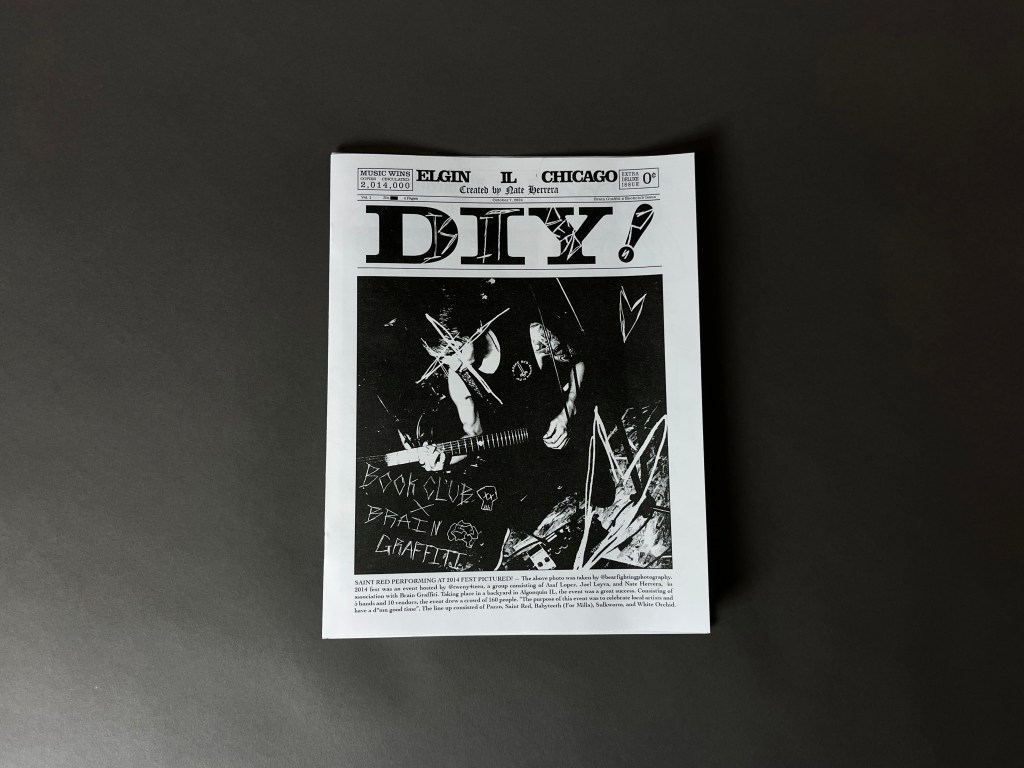
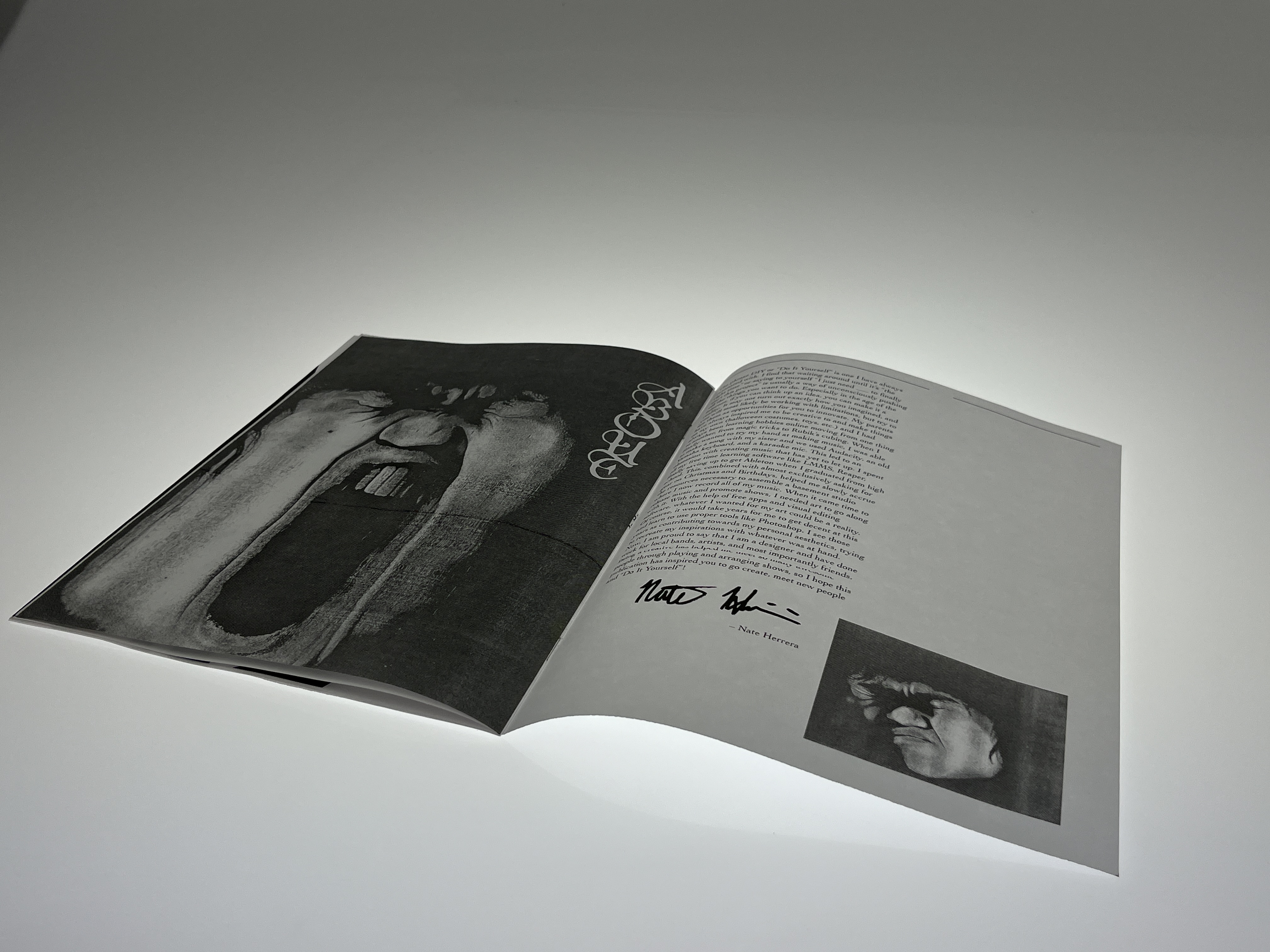
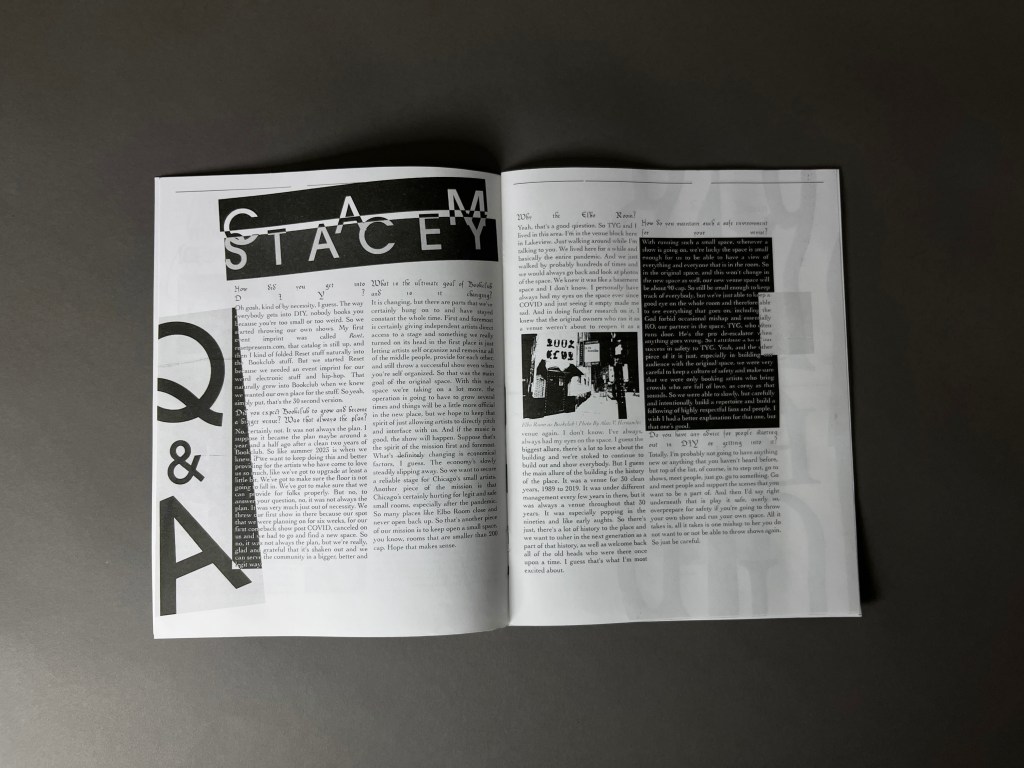
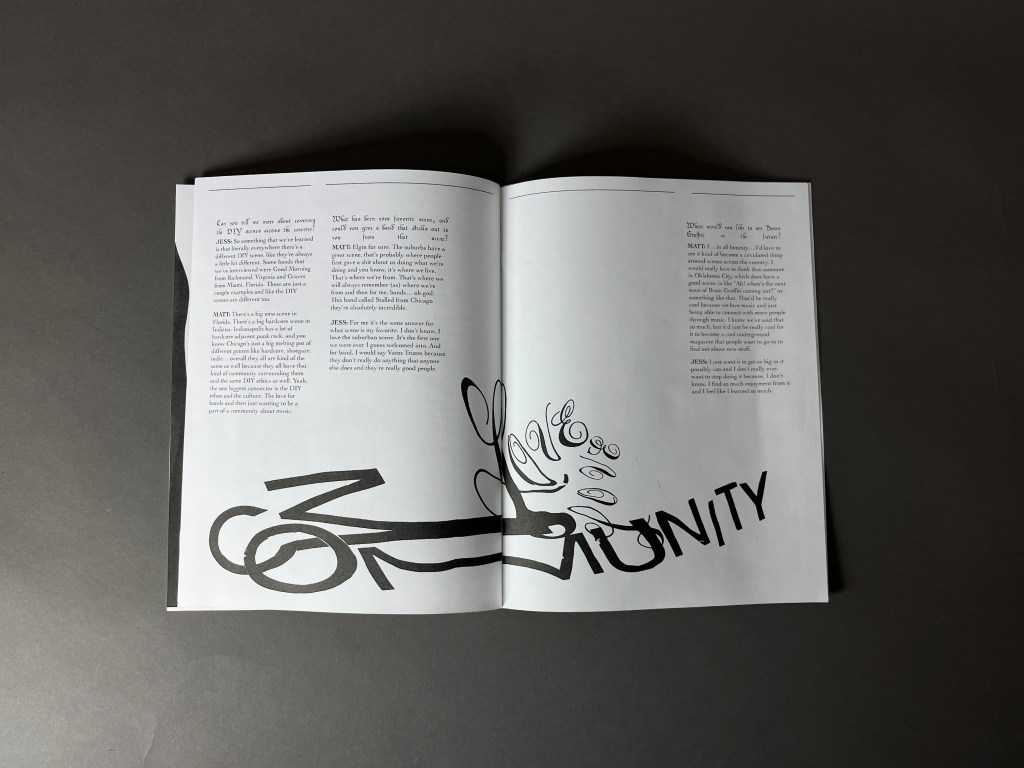
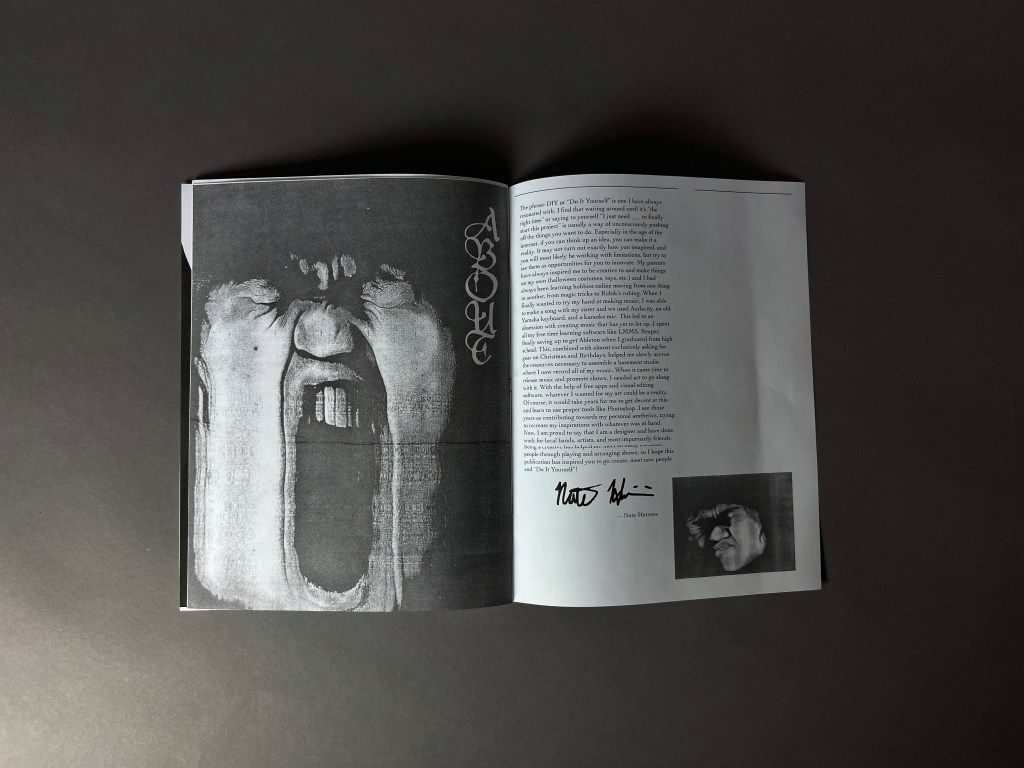
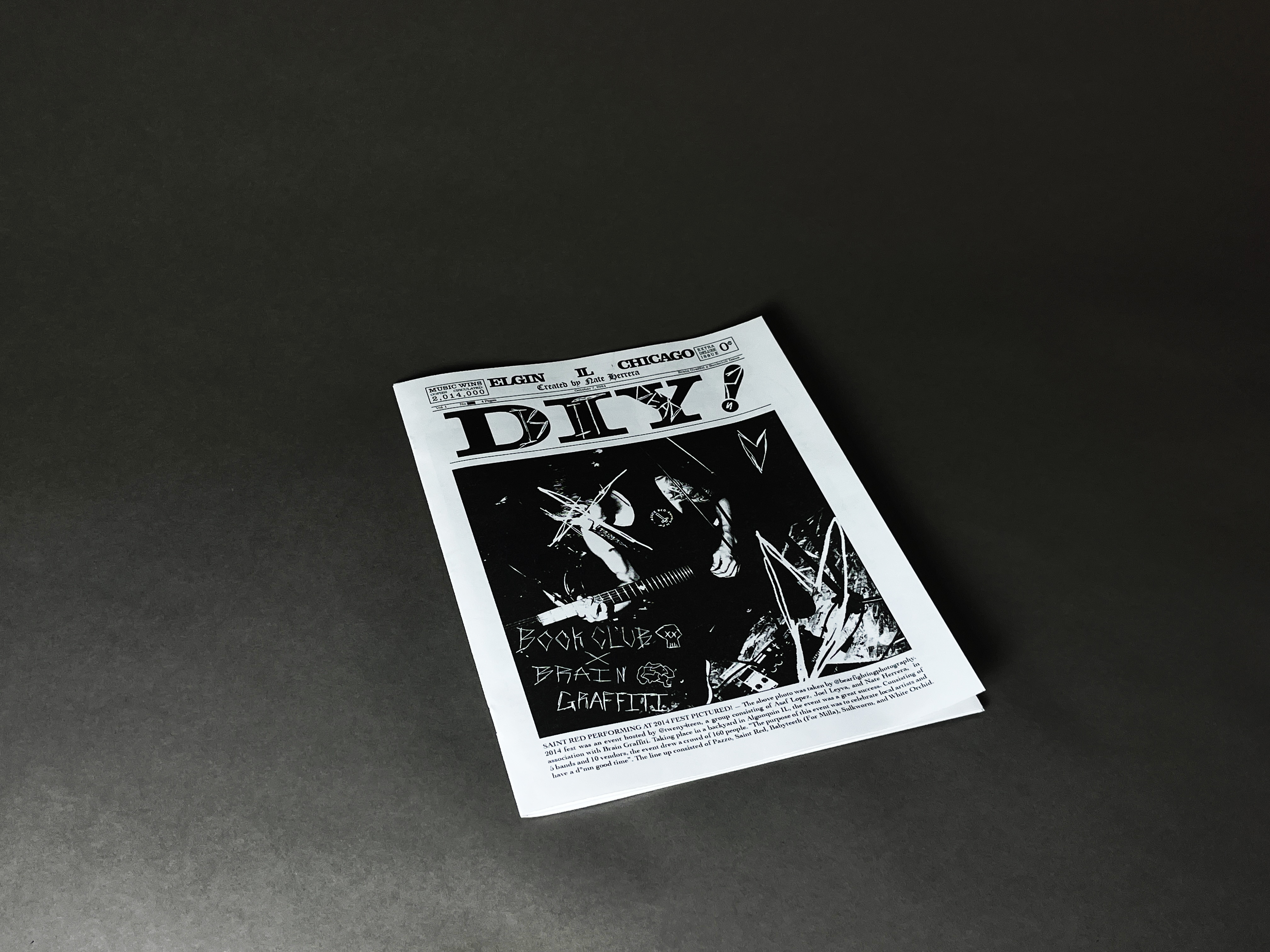
For this project I was tasked with creating a zine about shared spaces. I decided to take inspiration from other punk publications like Maximum Rock and Roll and RayGun Magazine. Combining analog and digital design techniques, this publication covers two DIY groups that regularly host events in Chicago with interviews and additional text written by me.
Assets made in Illustrator, Photoshop. Compiled in Indesign. Printed using Risograph black ink.


Ideation
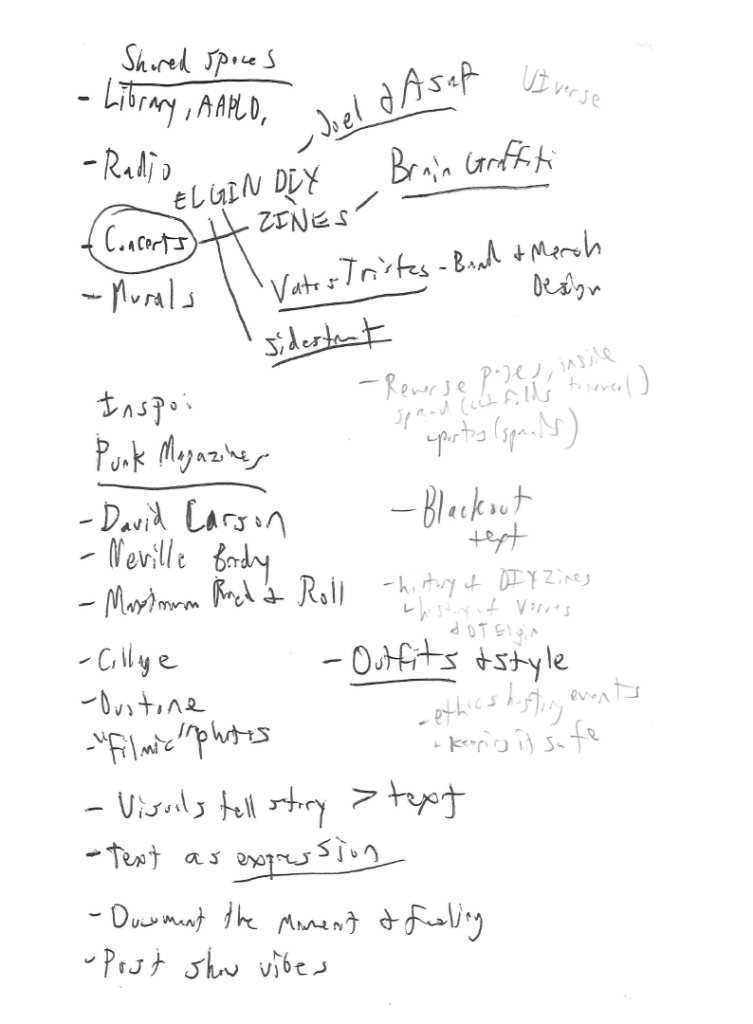
When considering what space I wanted to cover for this Zine, the DIY scene stood out to me as it is something I have been a part of for a while now and have made many friends in. Below are scans of my design journal, brainstorming ideas for what to cover, who to interview, and the format of the zine.
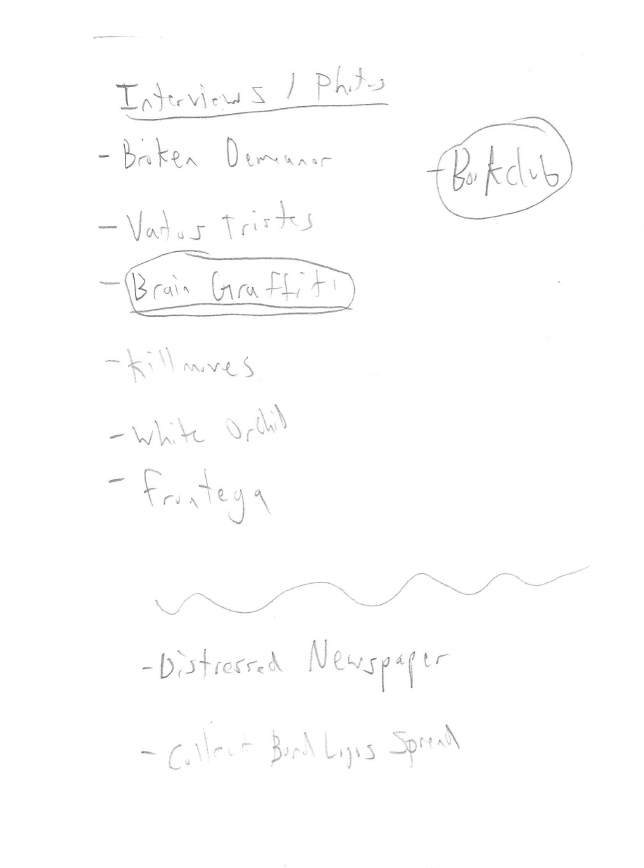


Research
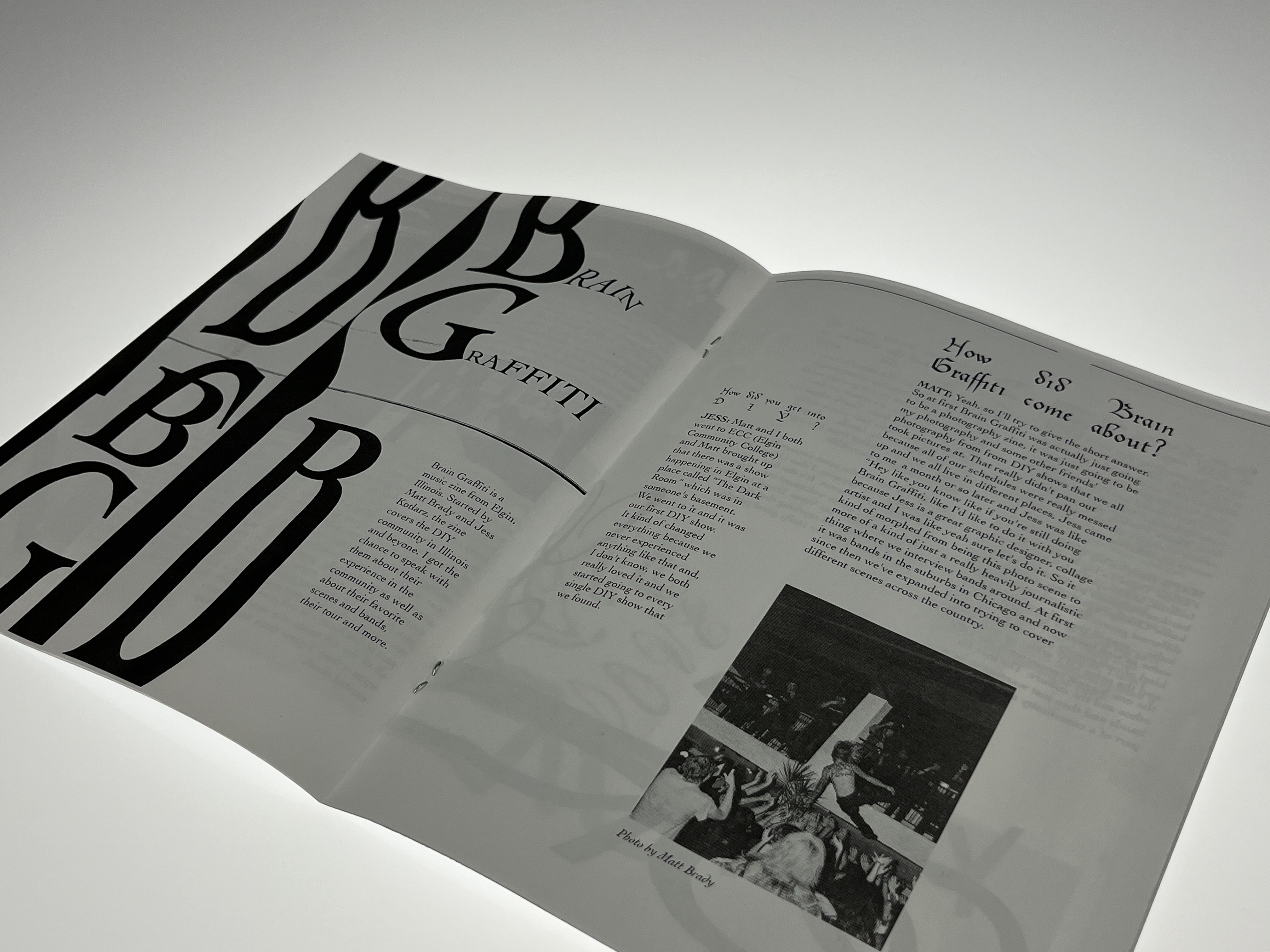
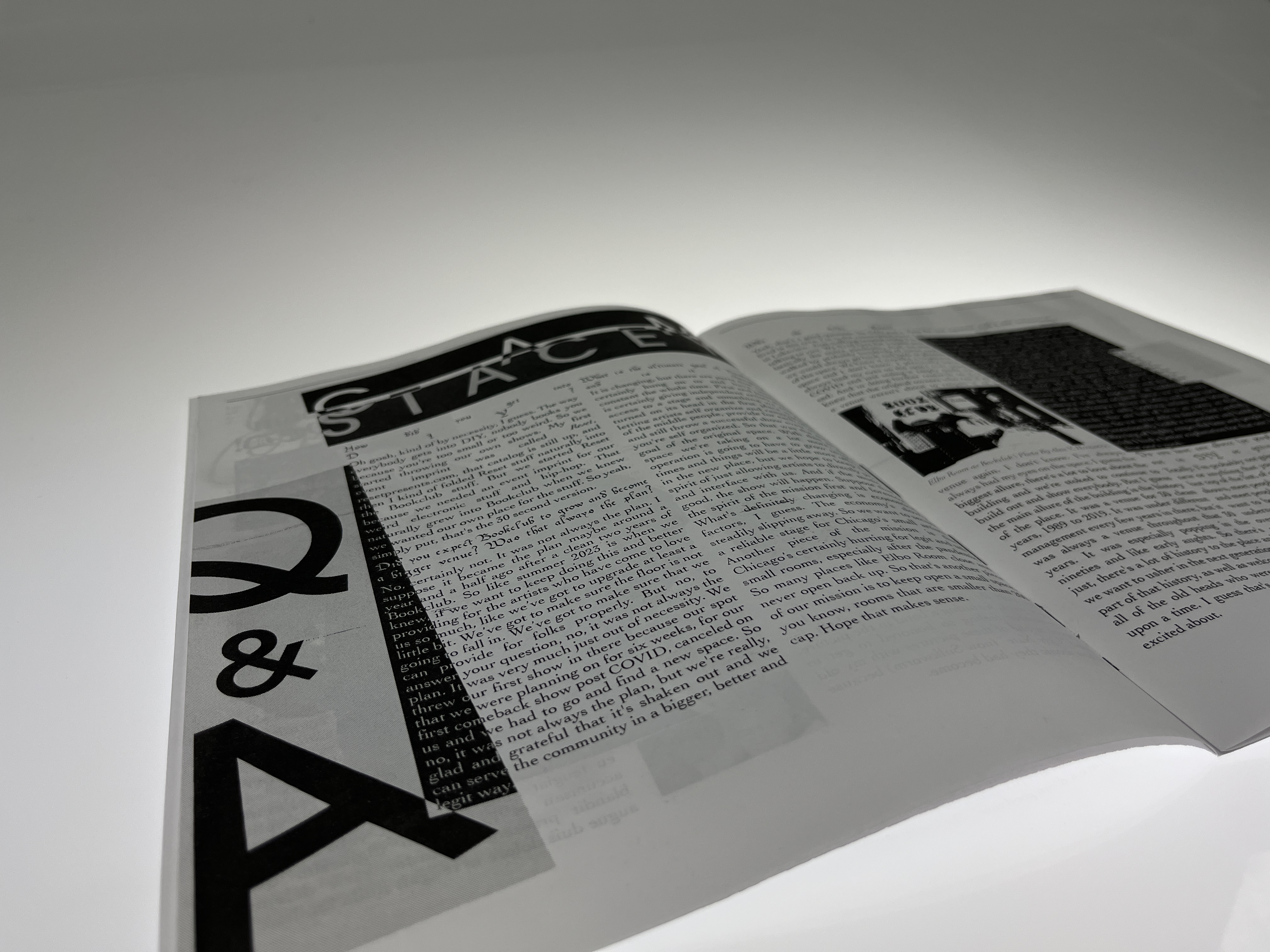
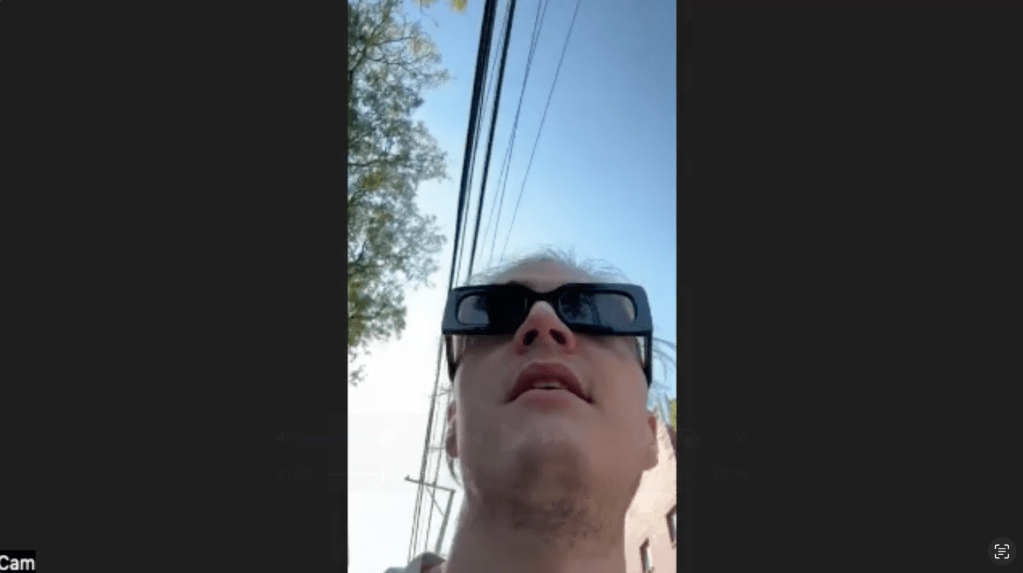
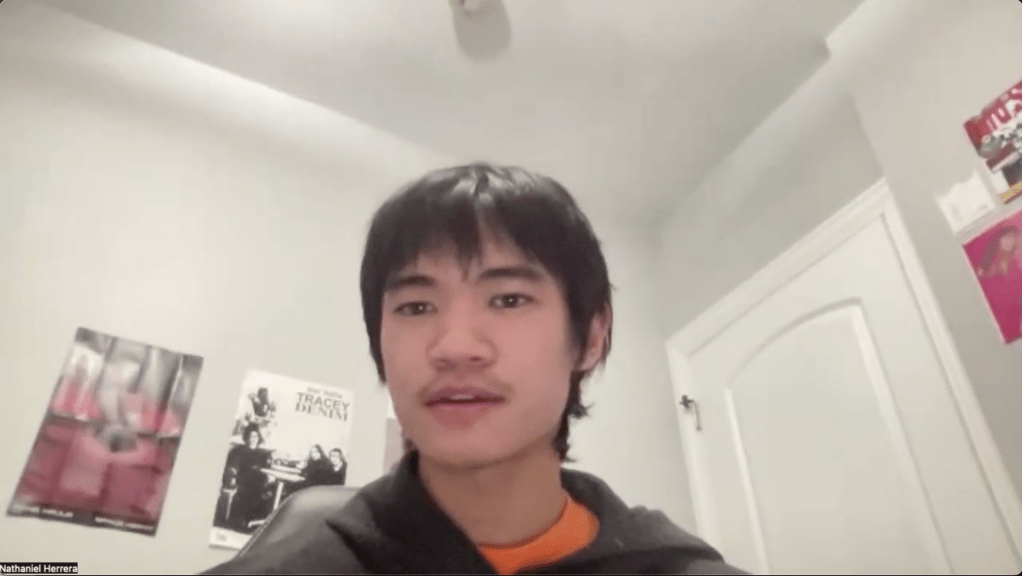
I decided to interview Matt Brady and Jess Kotlarz, the creators of Brain Graffiti (an indie zine based in Elgin IL who host local shows as well). Cam Stacey, an owner of Bookclub (a popular DIY venue located in Chicago). I asked questions regarding their growth and ideologies behind running DIY shows.
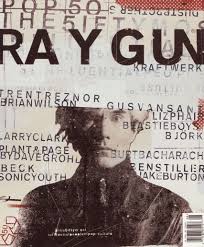
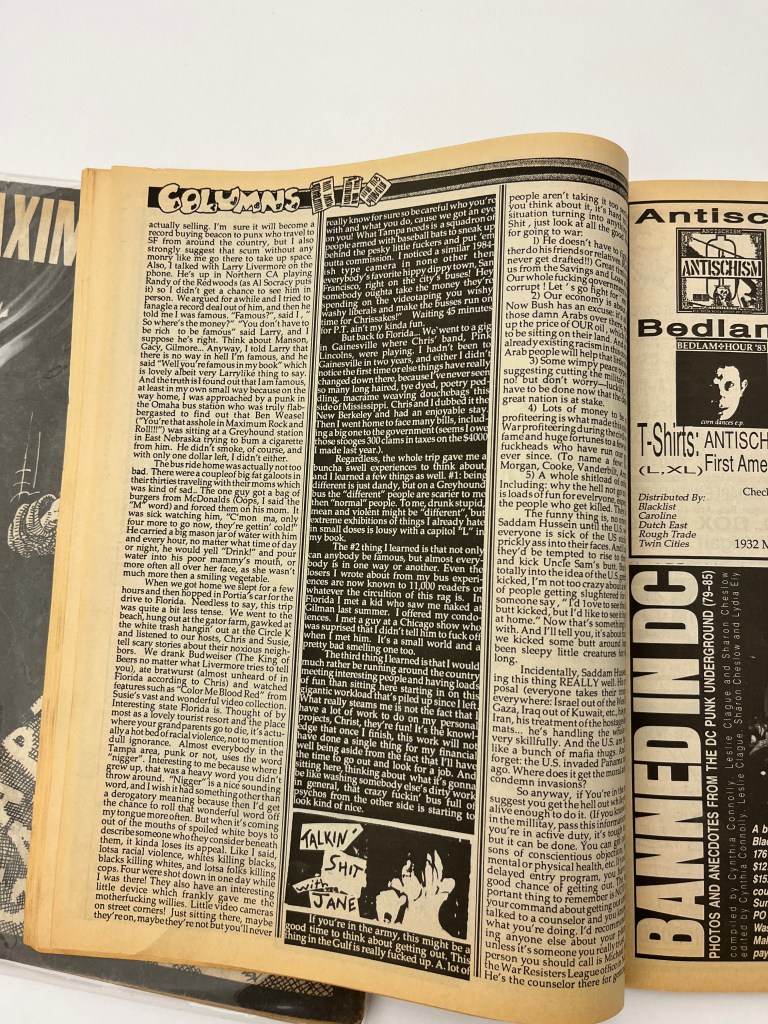
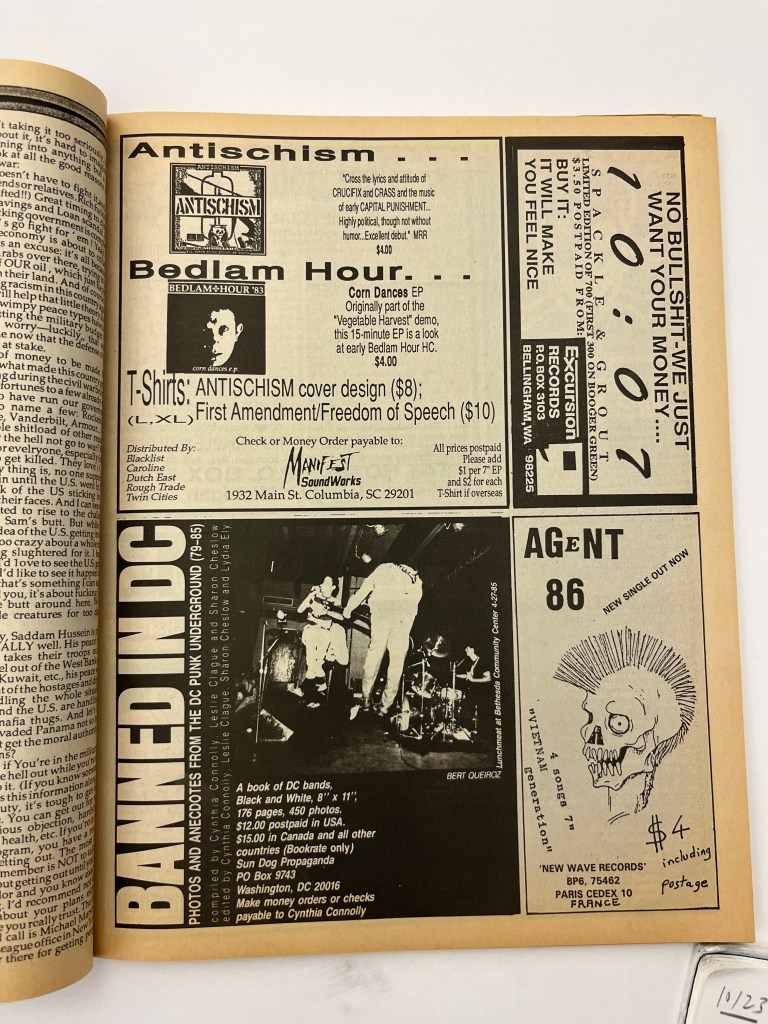
I drew a lot of inspiration from David Carson’s analog techniques, other punk publications like Raygun and Maximum Rock and Roll, as well as this infamous news article about the electric chair. It is common to hear the phrase “DIY is dead” and I wanted to reference that visually.

Iteration
I had been working with elements of analog techniques and mixing them digitally for past projects, so this served as the culmination of these experiments in a longer format. My approach to design was very experimental. I worked by printing typography, collecting images, making cutouts, sketching, and scanning/rescanning images to create graphics for the spreads. I would then choose my favorite results, import them into Illustrator, and upscale them with image trace. Finally compiling them with the text from my interviews and additional text in indesign.
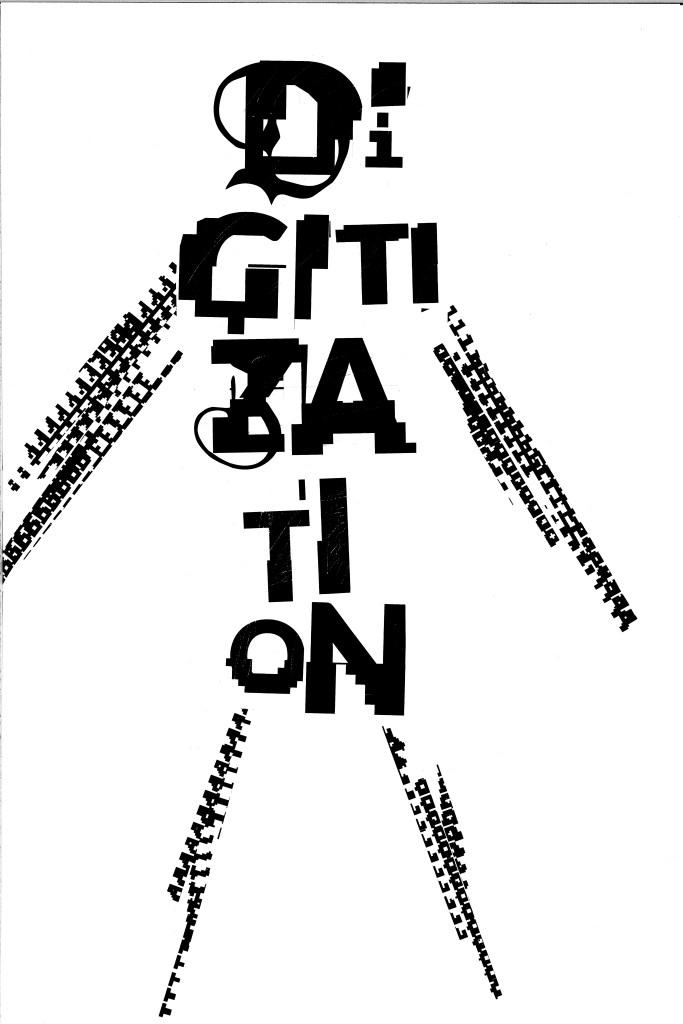
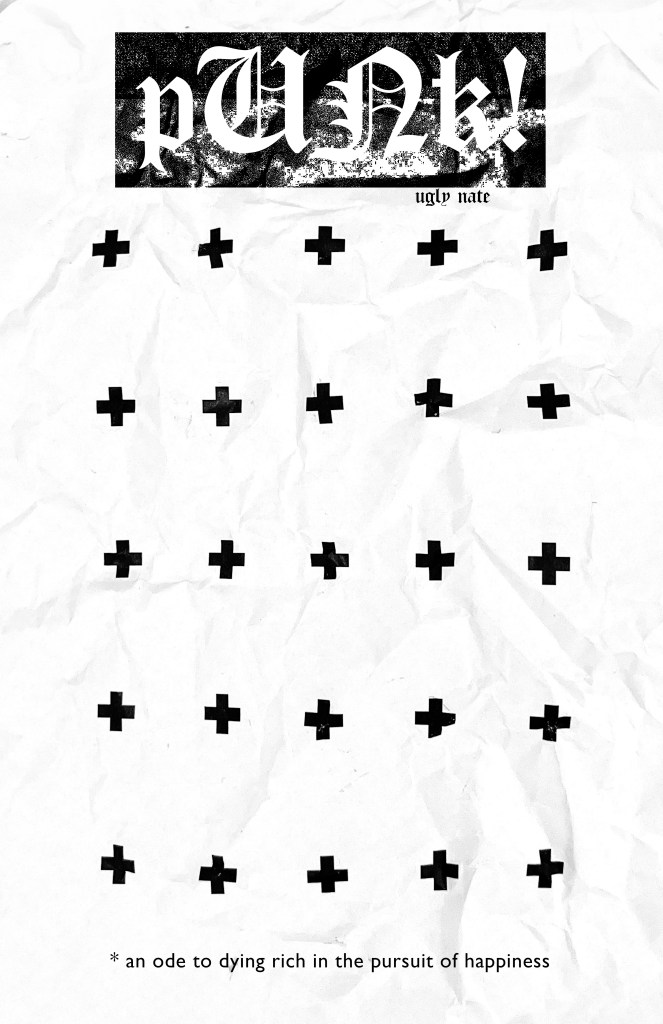
Previous experiments blending analog and digital techniques.
Drafts
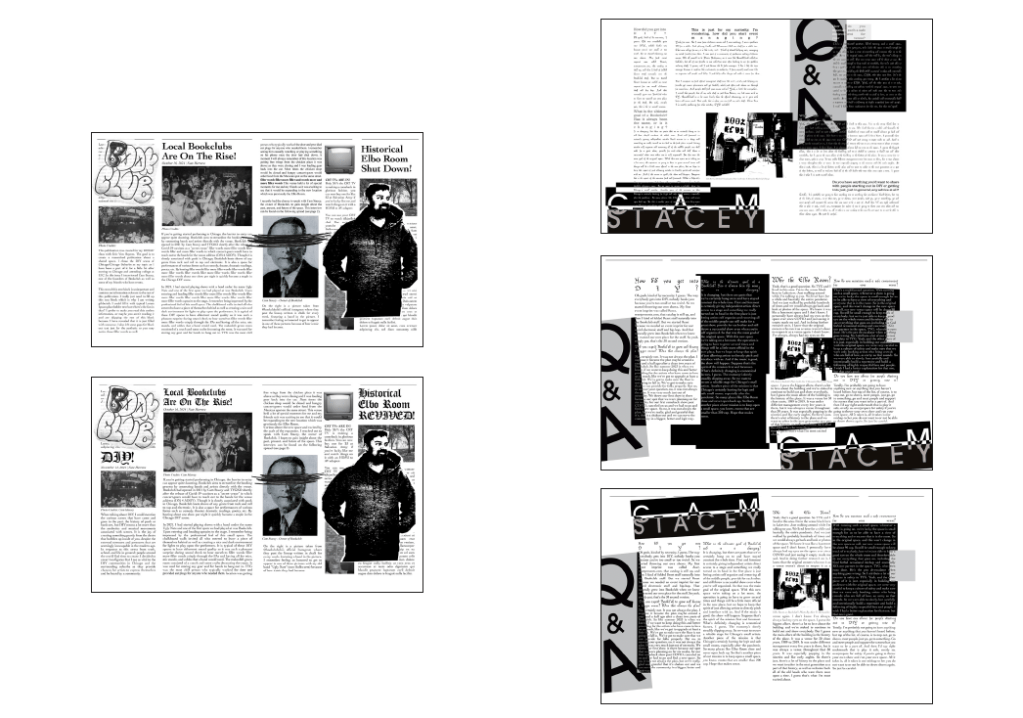

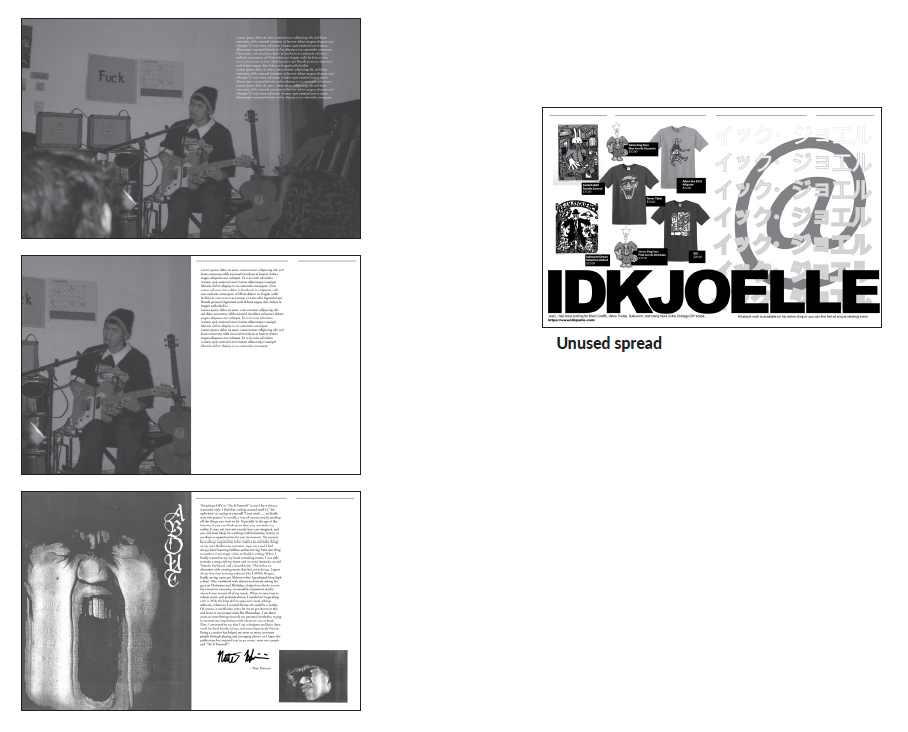
Final Print
For the final print, I used our Risograph printer with black ink on white for easy reproduction and to tie in with my references. Being able to reprint and circulate many copies so easily also allows anyone to print them, which is in line with my design ethos of making information and art accessible. After documenting and posting the pictures to my Instagram, it was a great feeling to receive a ton of positive feedback from everyone involved and having people ask for copies.
 Nate Herrera