
Project Brief
This project is a VR experience designed in the CAVE2 environment that directly addresses SDG 11: Sustainable Cities and Communities. The goal focuses on making cities inclusive, safe, and resilient through improving public transport and providing accessible public spaces. By solving interactive word puzzles, the project encourages players to reflect on transportation, infrastructure, and urban planning choices that influence the quality of life in cities. Made in collaboration with Aschynt Pajankar, a CS Student at UIC, who helped with the scripting, debugging and layout.
Research
“The current warming trend is different because it is clearly the result of human activities since the mid-1800s, and is proceeding at a rate not seen over many recent millennia.1 It is undeniable that human activities have produced the atmospheric gases that have trapped more of the Sun’s energy in the Earth system. This extra energy has warmed the atmosphere, ocean, and land, and widespread and rapid changes in the atmosphere, ocean, cryosphere, and biosphere have occurred.” (https://science.nasa.gov/climate-change/evidence/)
In DES/CS427 we were tasked with facing this monumental problem. Considering the bleak state of the world, and the surpassing of global climate goals, how can we make people better understand this problem? This class’ solution…? VIRTUAL REALITY. We had the “rare and exciting opportunity as design students to work in the CAVE2, the most advanced virtual reality collaborative environment and high-resolution display technology available today”!
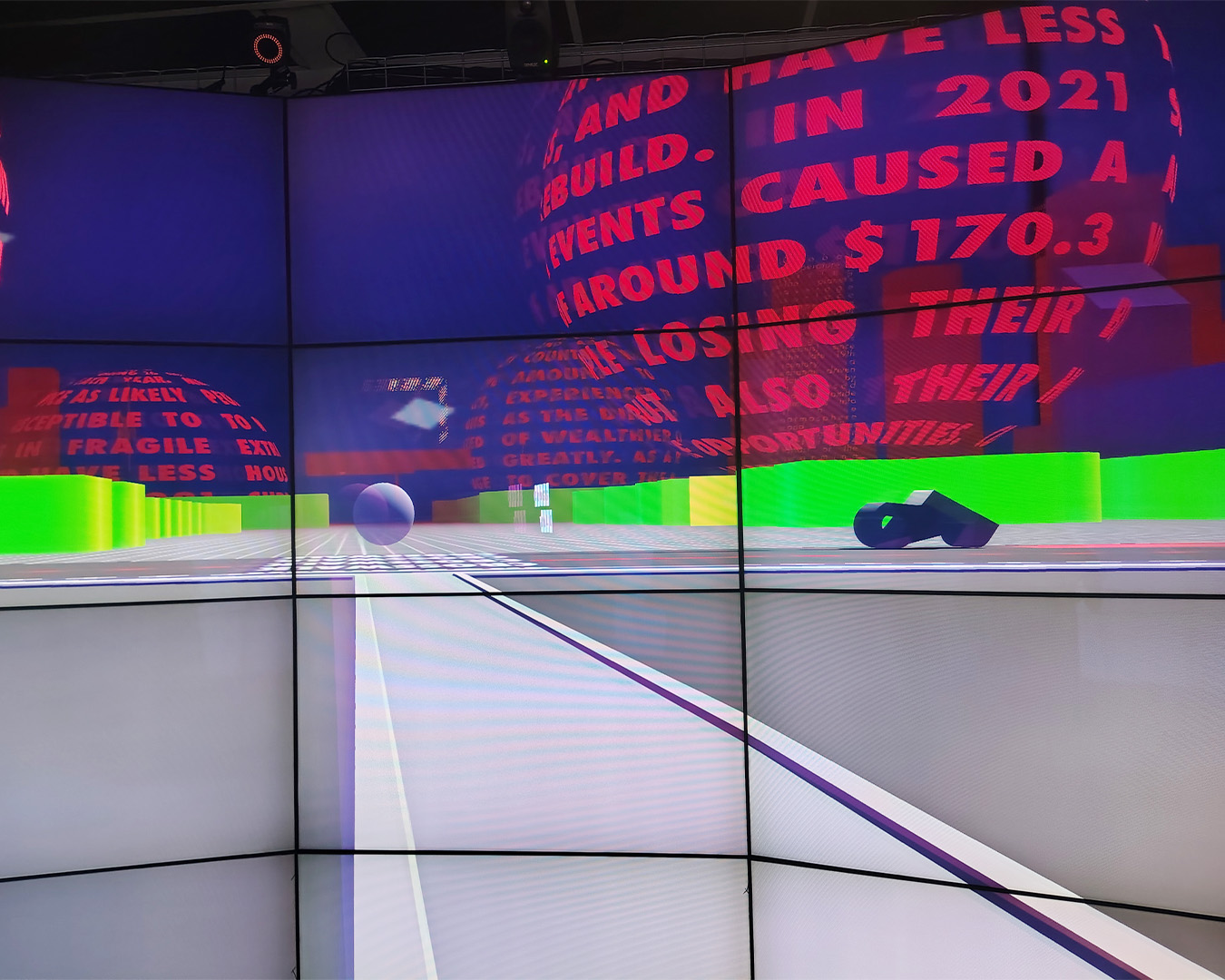
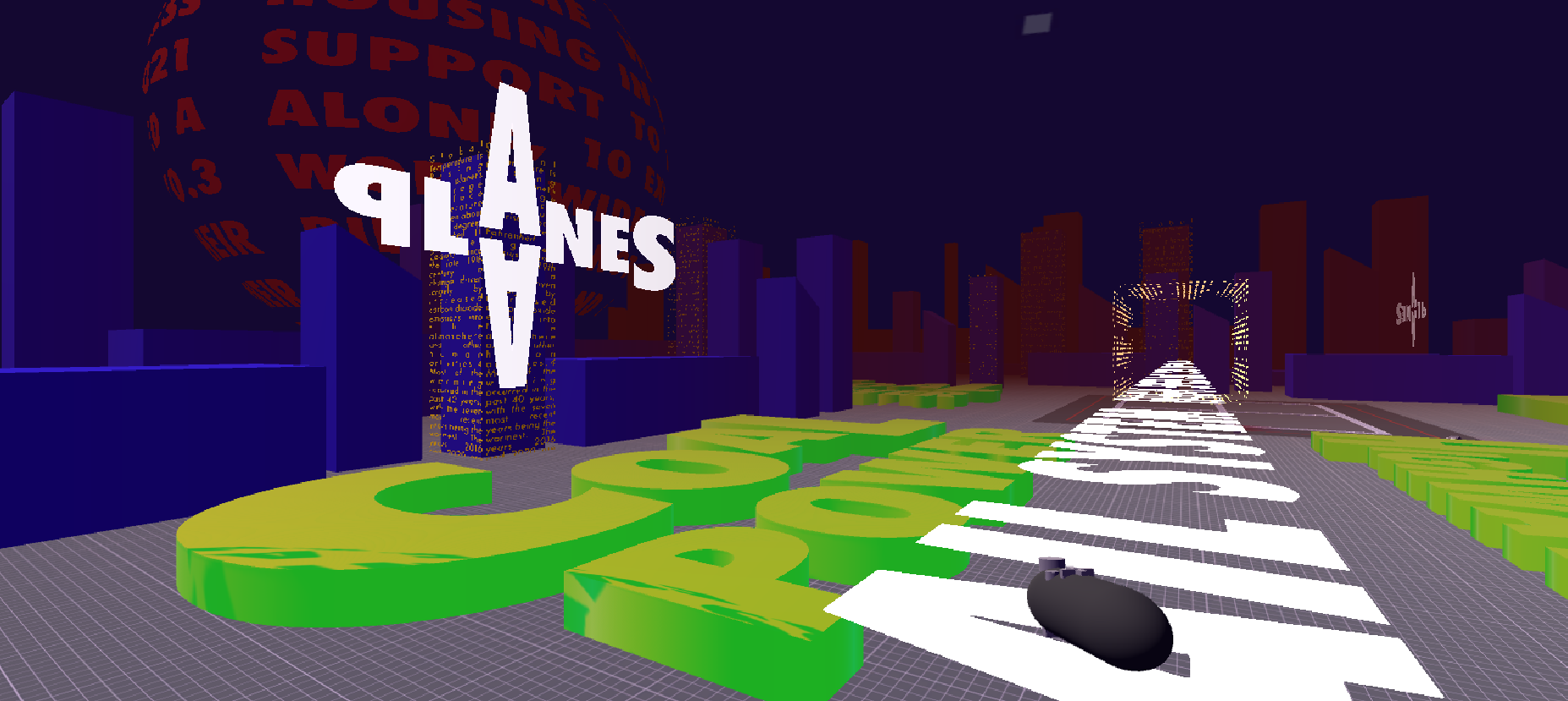
For our final project, we built out a bleak and dystopian depiction of the “future”. Filled with towering buildings powered by coal, overwhelming highways, and vacant lots; our city begs to be improved.
We were inspired by futuristic cities such as Tron and the art installation Legible Cities for the aesthetics.
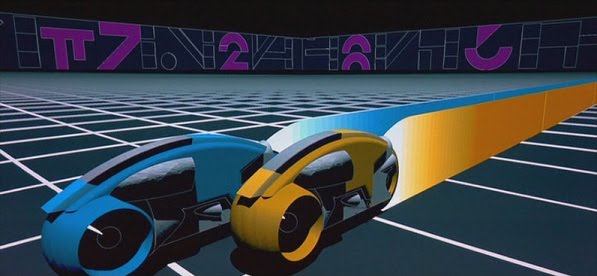
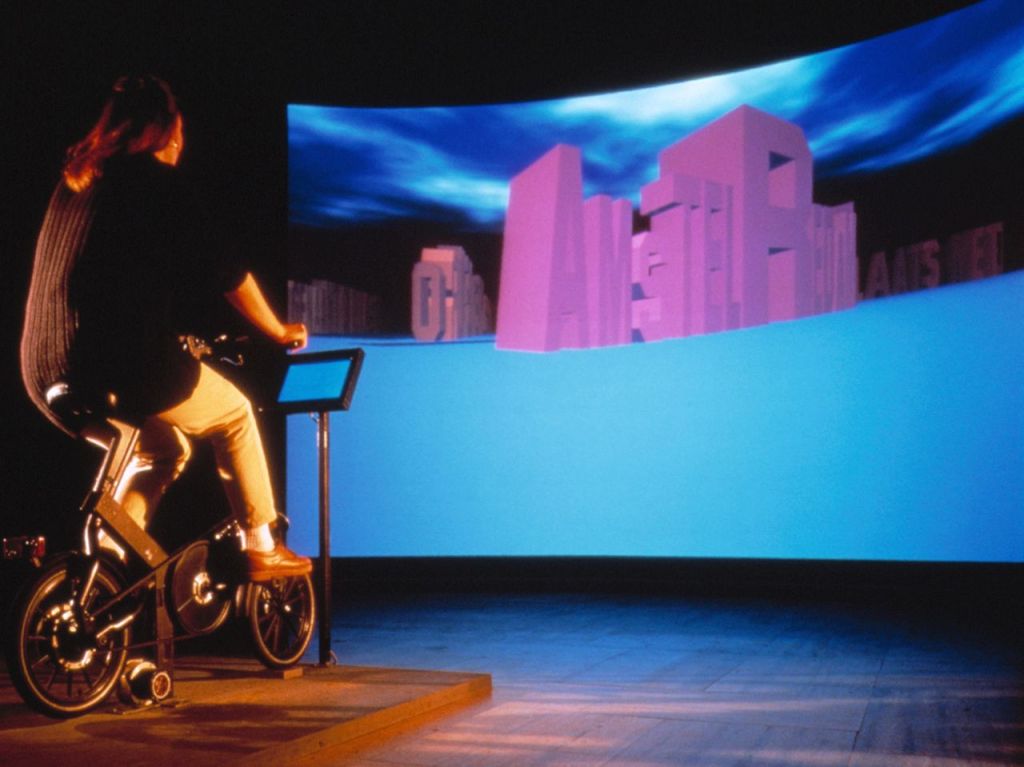
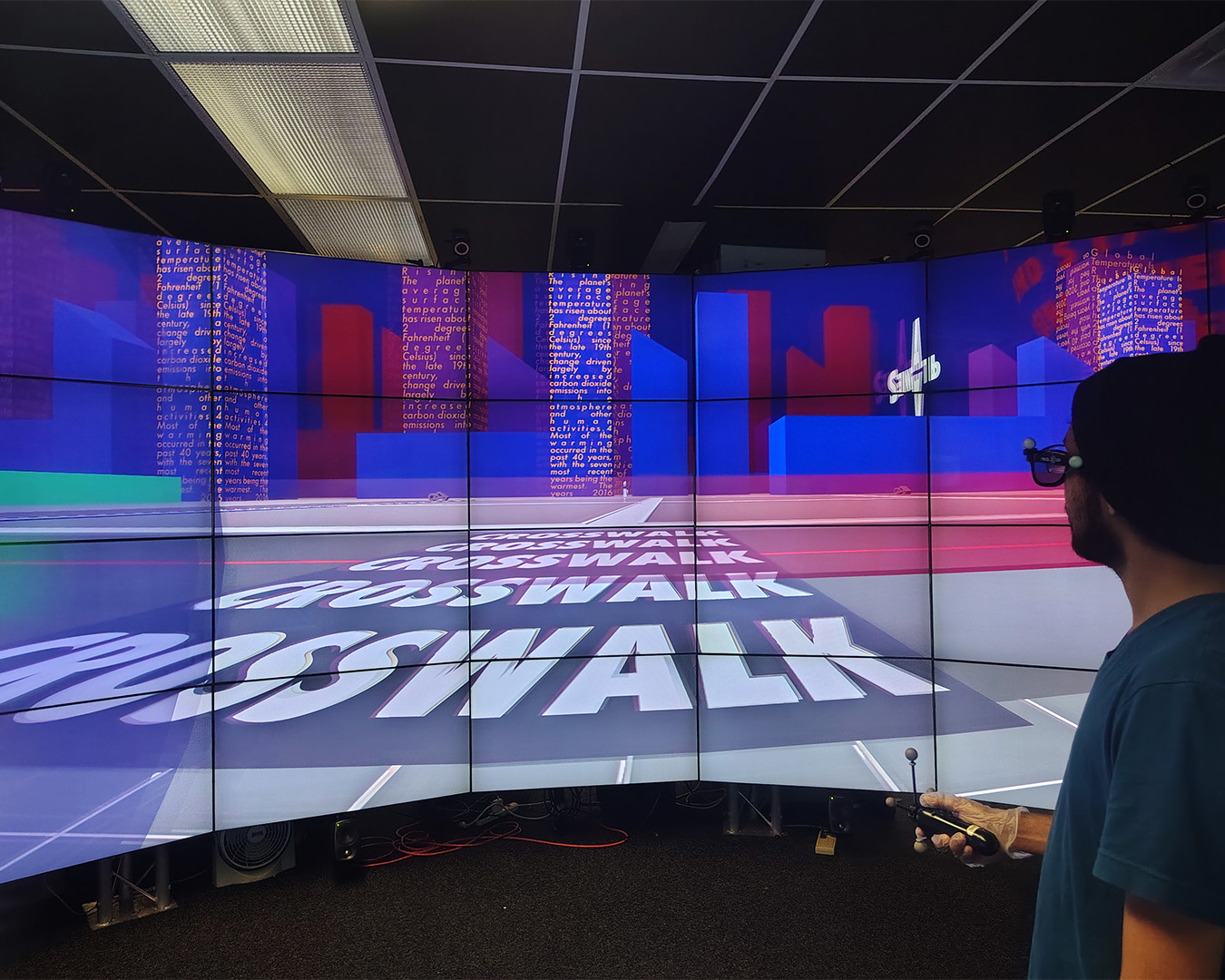
We used Futura, a modern font with lots of history and a timeless look which is very similar to the font used by public transit systems today, to experiment with typography in 3d space.
Custom assets were created and textured with text to build out the final product. To further immerse our users, custom sounds were recorded and implemented in voice lines and for cars.
Ideation
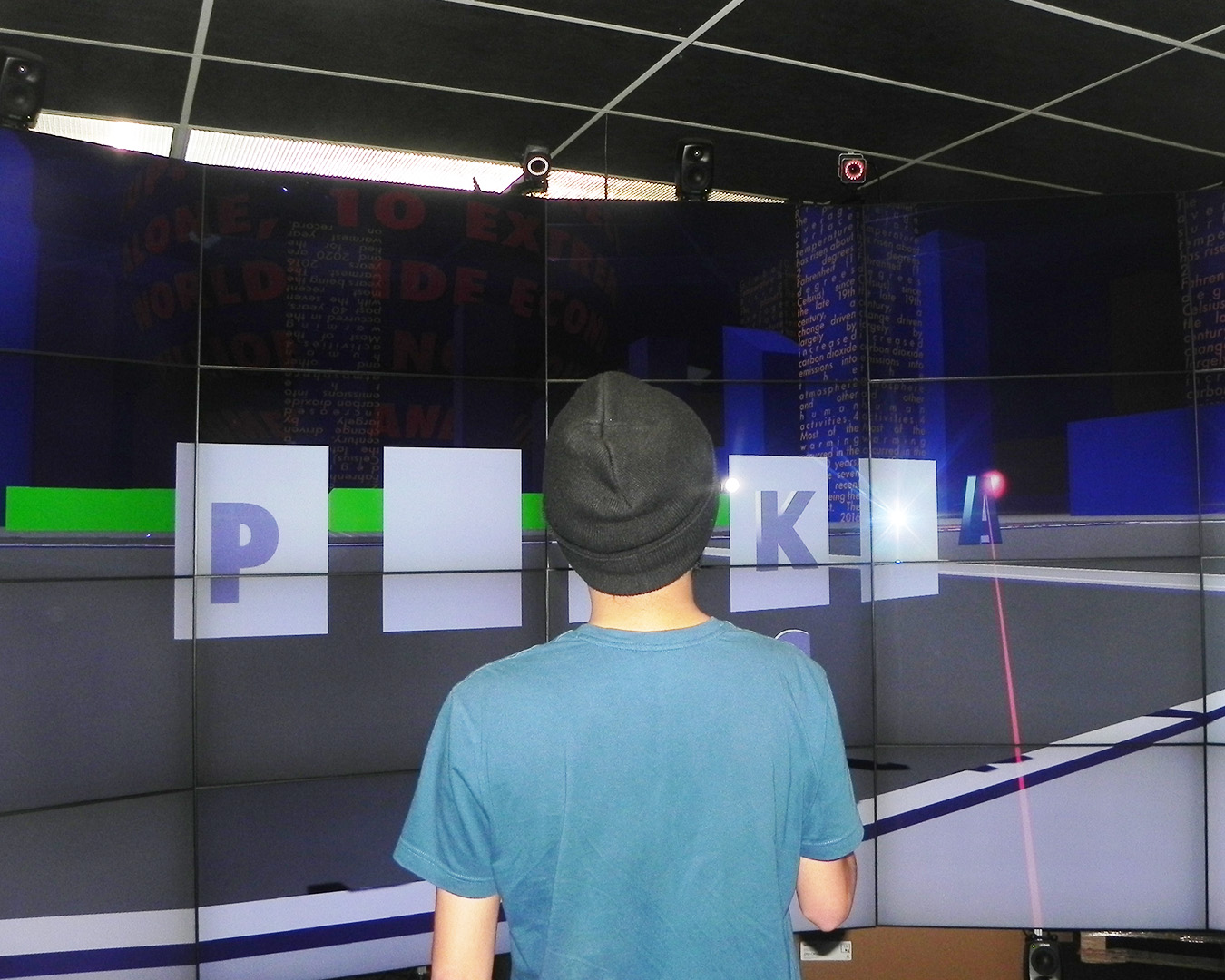
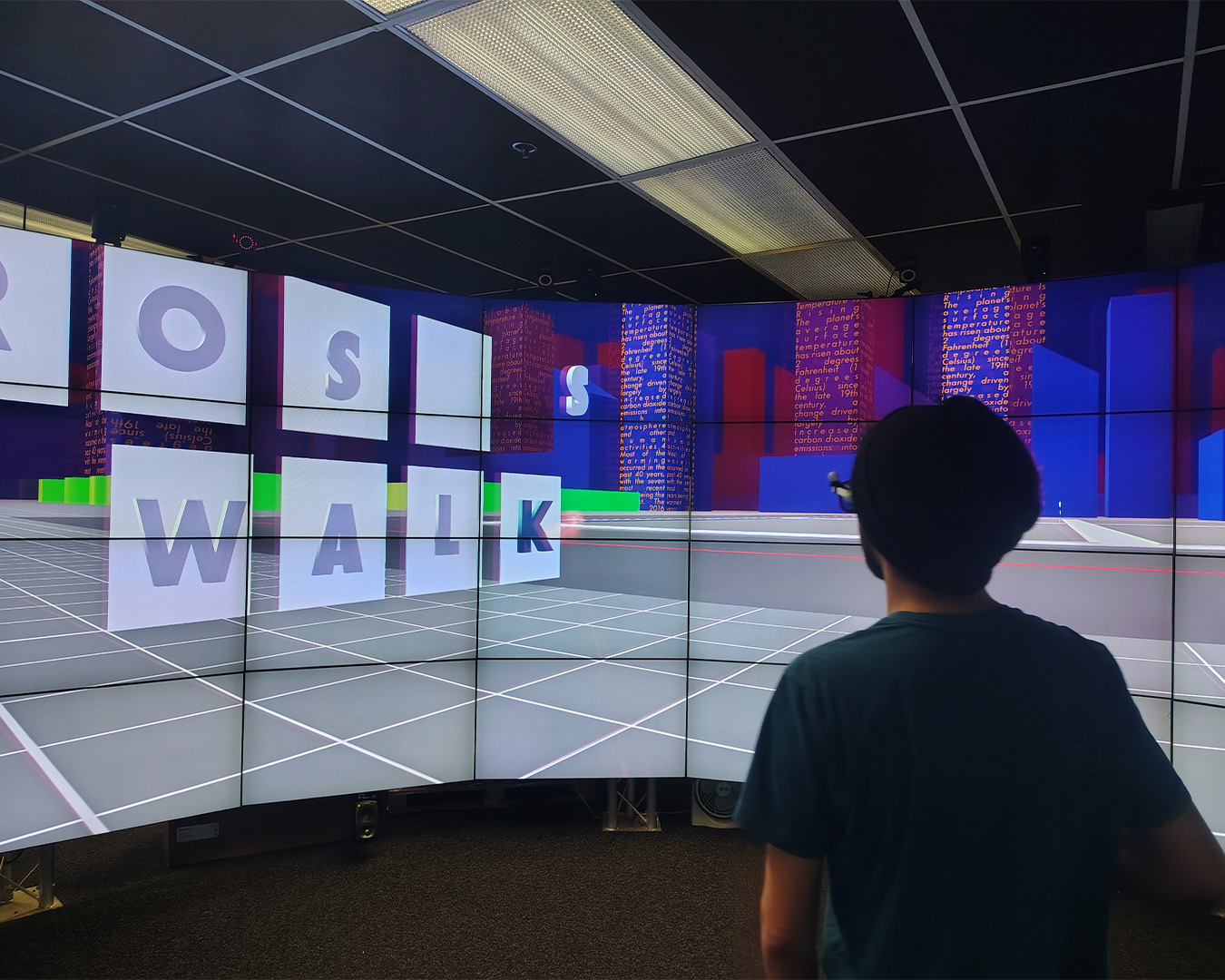
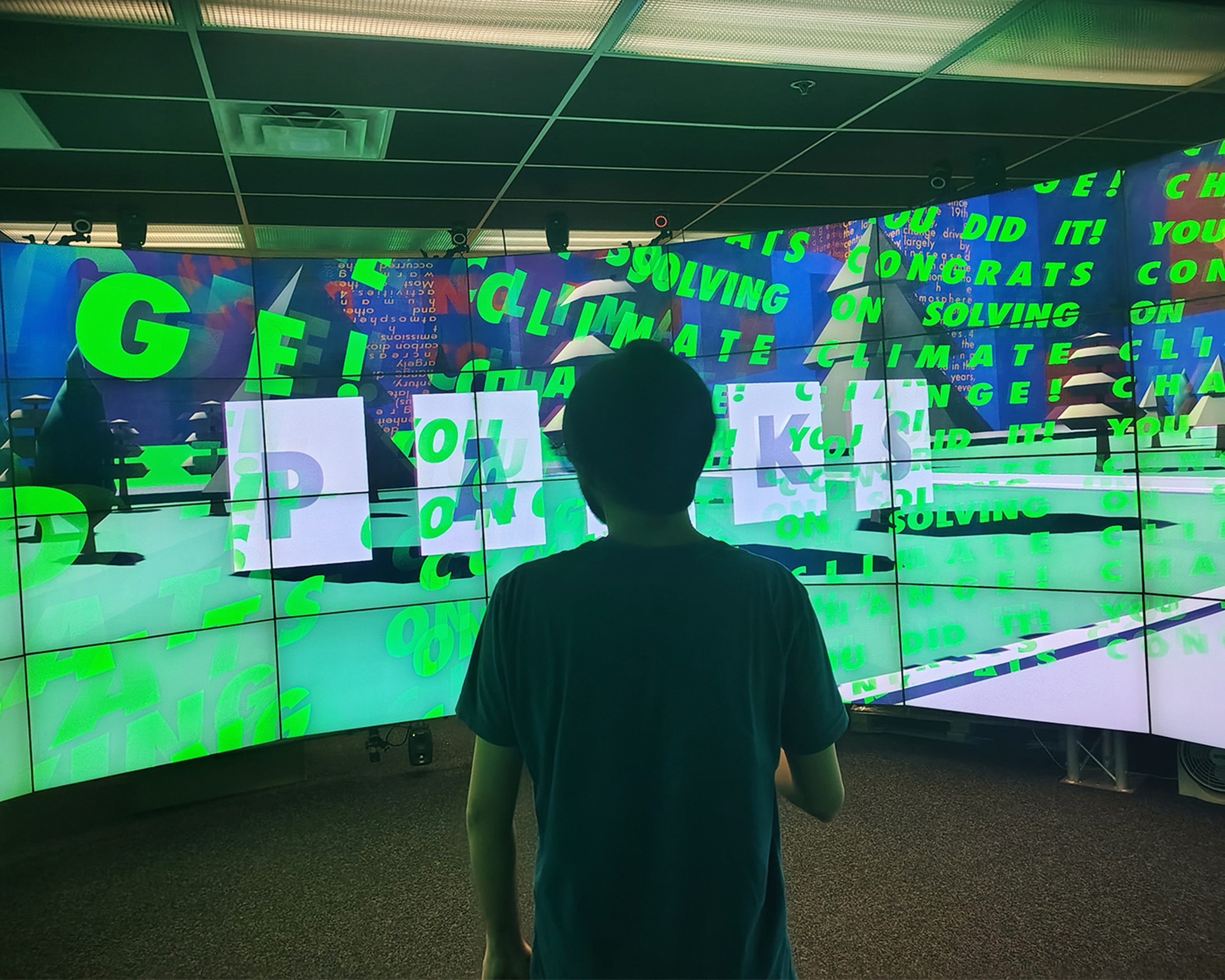
Our initial idea for this project was a city builder in which the player could move through 3D space to arrange a commuter friendly city in a tactile manner. We decided this approach would not be the best use of the VR environment considering it would be a top-down view of a city. We developed this concept into a simple interaction in which the player can physically unscramble letters to reveal the solutions to various problems, triggering a change in the environment to literally build a better future.
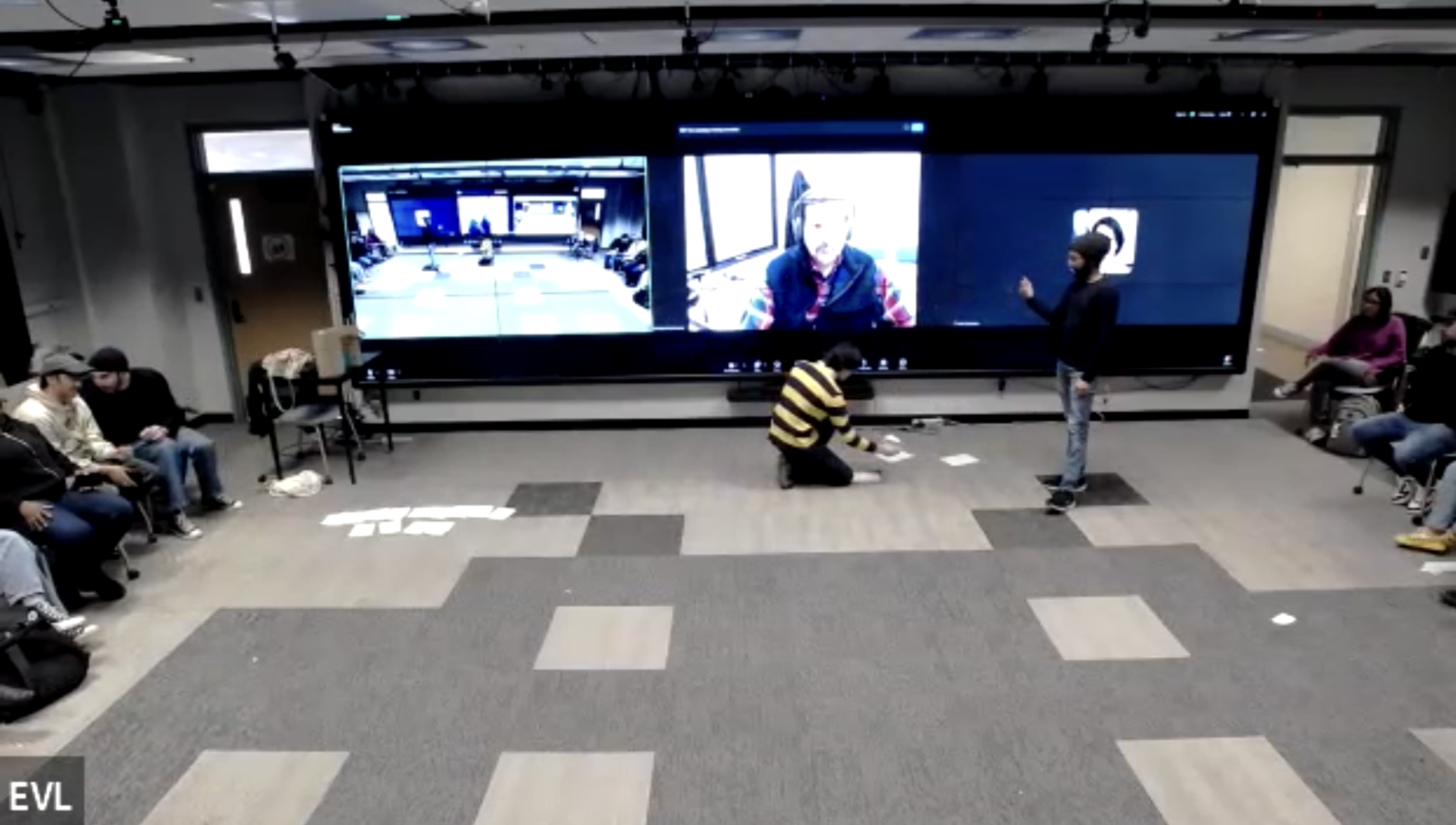
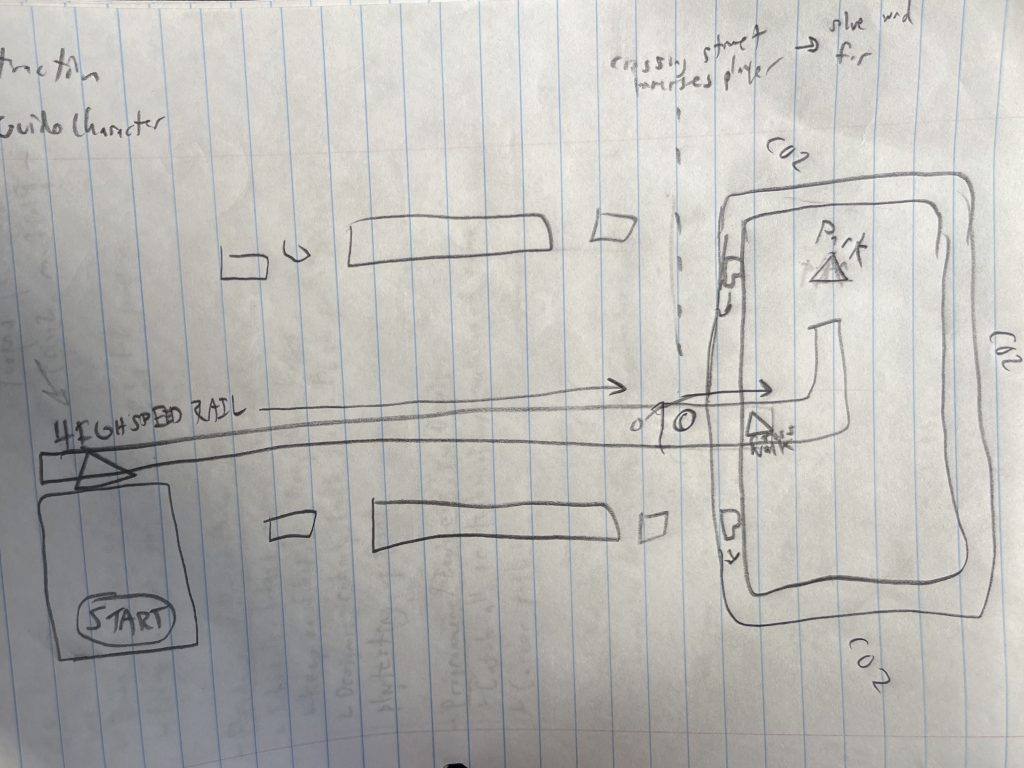
Our in-class improv session which helped us understand the feel of our UX in addition to our level design sketches.
During our in-class theater/improv session, we acted out the scenes from our storyboards to visualize how the interactions would play out while also narrating the actions. In addition to being able to feel out the motions, we got insight from a UIC Theater faculty member, Jeff Nyhof, further informing our project’s design. We got feedback about possible choices the user might make which we had to consider, such as what would happen if the user does not do anything. This led us to create audible/visual cues to facilitate interactions. A piece of advice which stuck with me was to use words as actors in the scene, not just to tell the user what to think. Considering the unique medium of VR; each action, movement, and sound had to be considered when developing the UI.
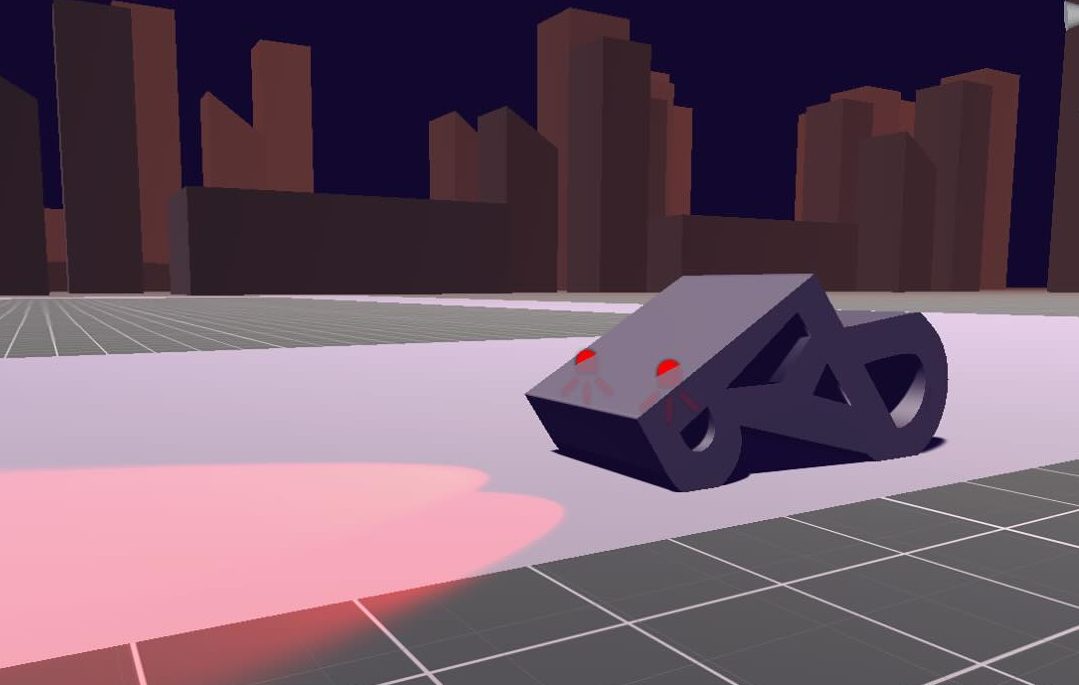
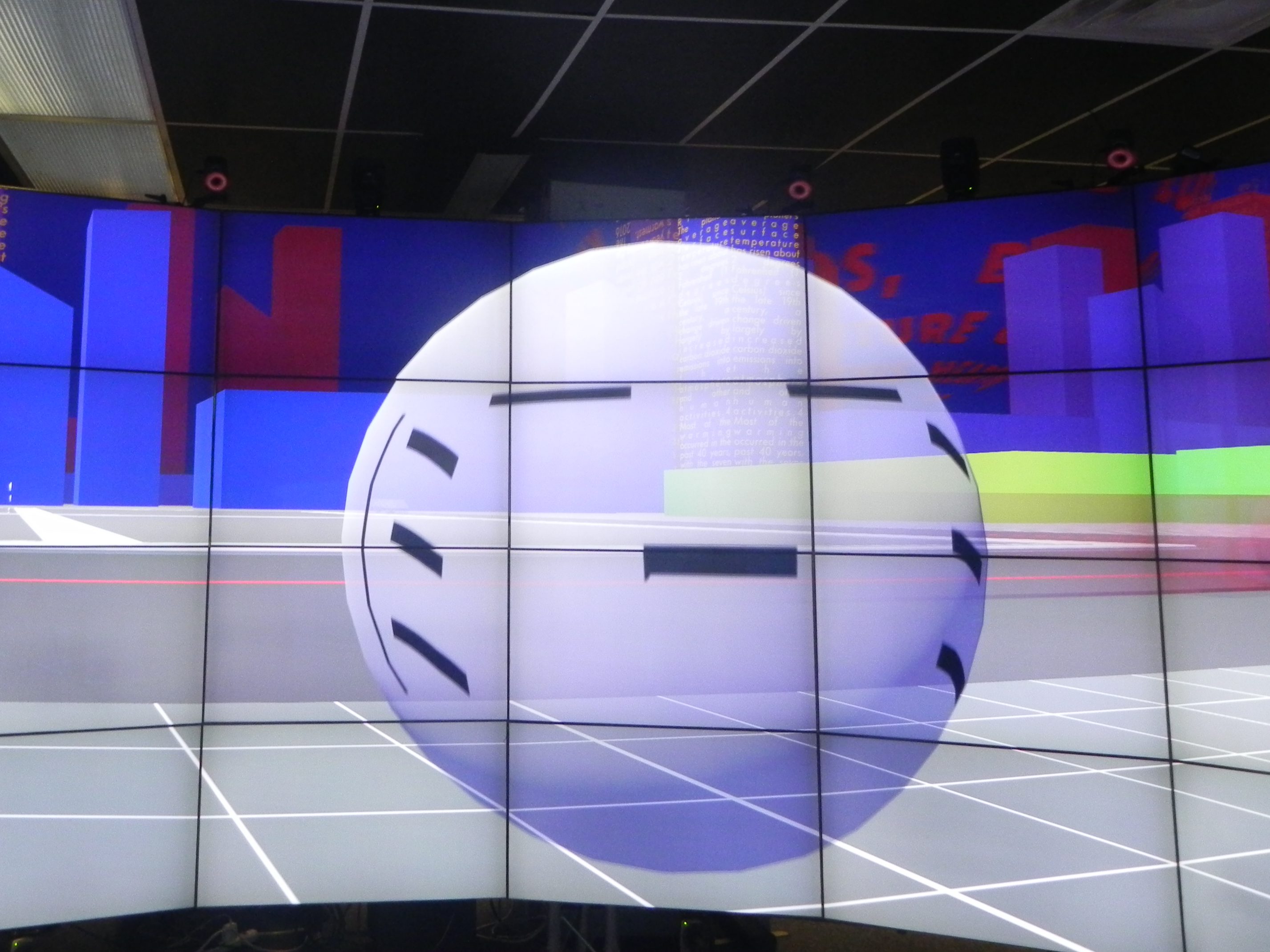
Custom 3d typographic car model and civilian character.
Final Showcase
Debuting to about 50 guests in the EVL CAVE 2 environment, we received lots of positive feedback about the immersive nature of the project and the unique environment we created. Though we had difficulties at first with the volume of our experience, in the end sound was a large factor in the immersion and contributed to the overall tone of the experience.
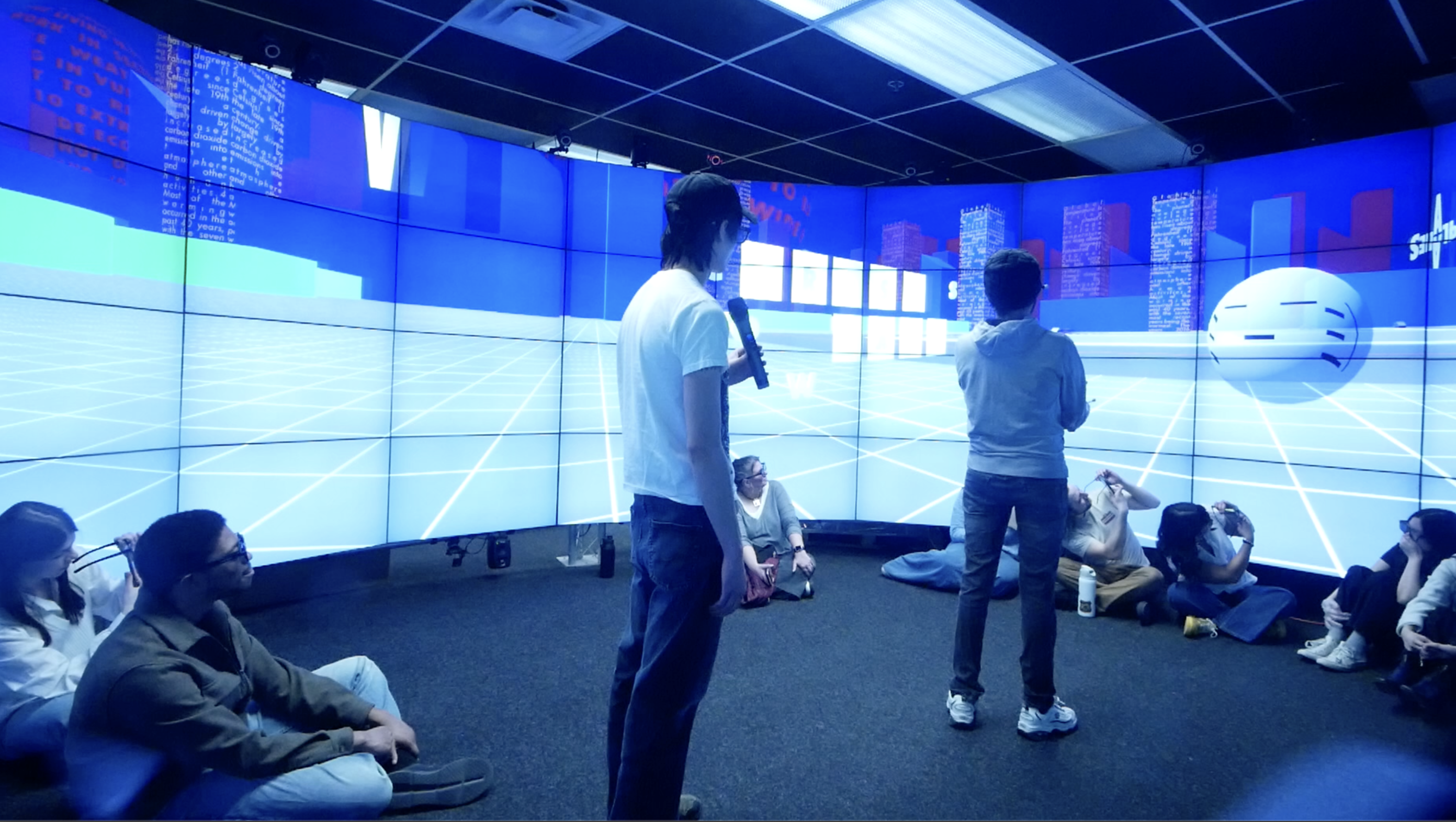
Ultimately, the experience demonstrated that building a better future involves recognizing problems and making large structural changes; whether through transit, walkability, or green space. By combining education and interactivity in a VR setting, we empower users to not just learn about sustainability, but to create it firsthand.
 Nate Herrera