
Paranormal Object Counter-Measurement Bureau
Paranormal Object Counter-Measurement Bureau is a single-player analog horror game. The player must navigate through a building’s increasingly terrifying levels, each home to a unique monster with its own way of chasing and hunting them. They must utilize various items to survive, solving puzzles to progress. Available in the “Final Output” folder in GitHub.
Made by Nate Herrera, Elson Allmuca, and Brian Daza using Unity 3D.
Level Design
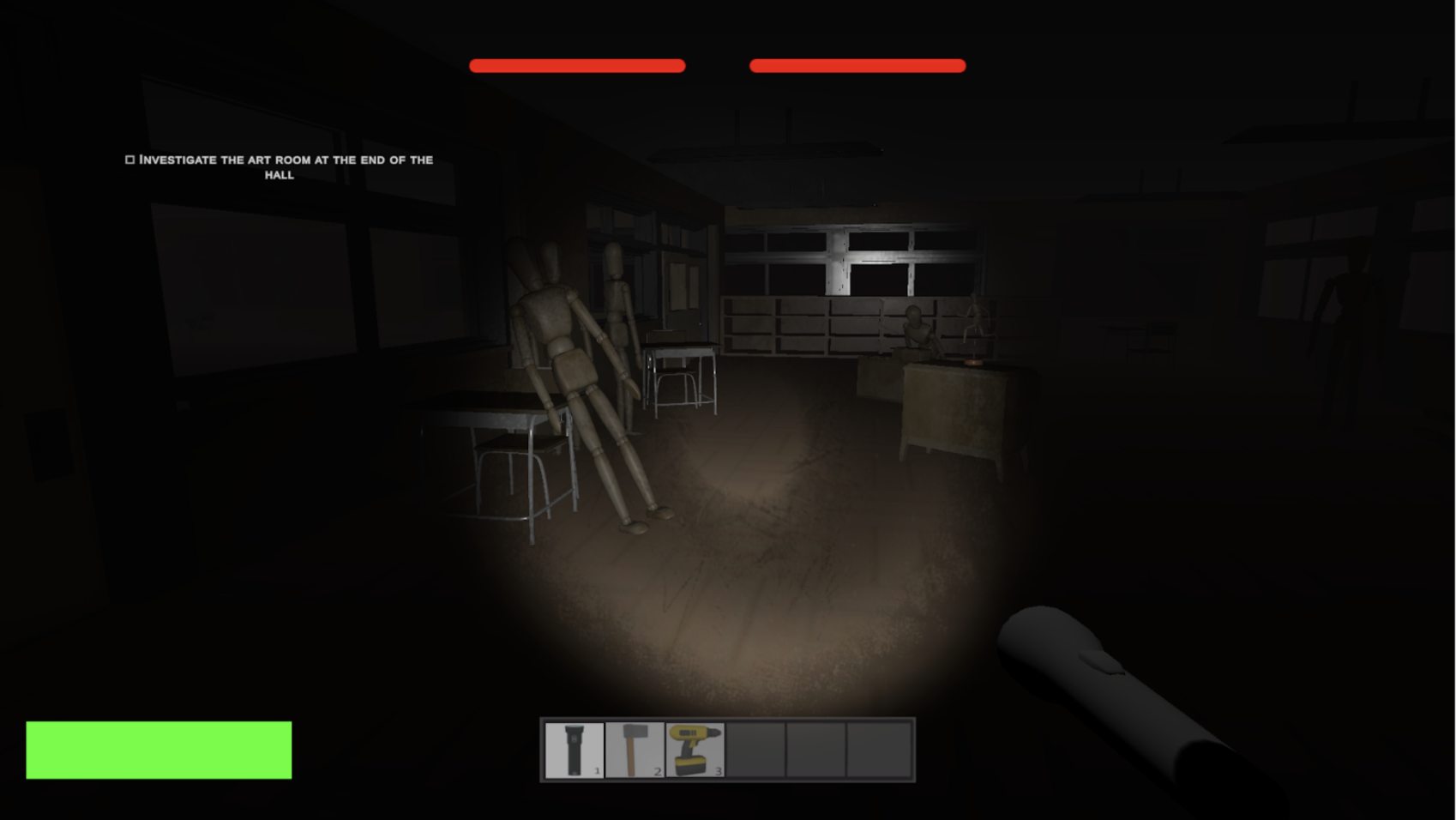
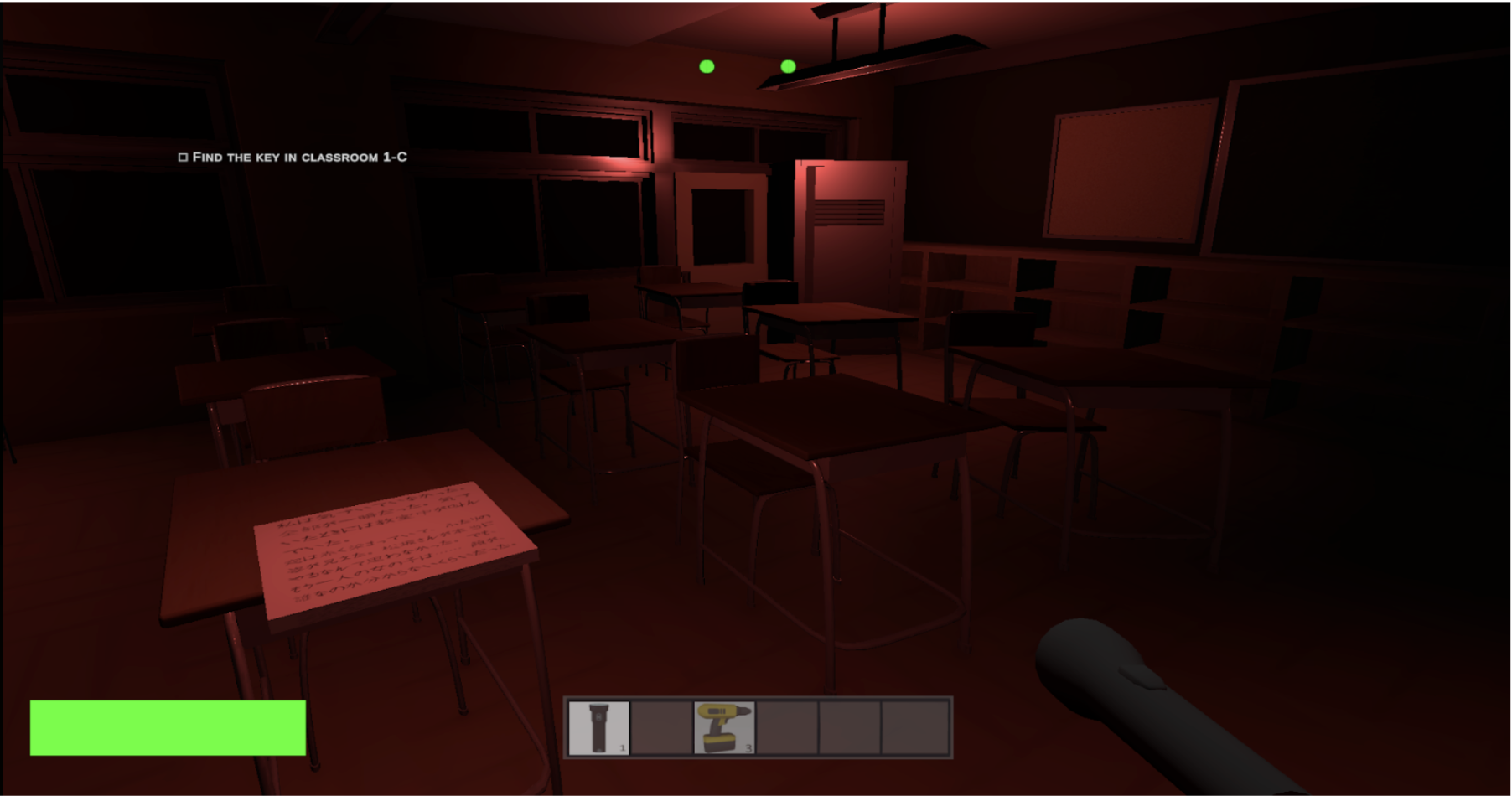
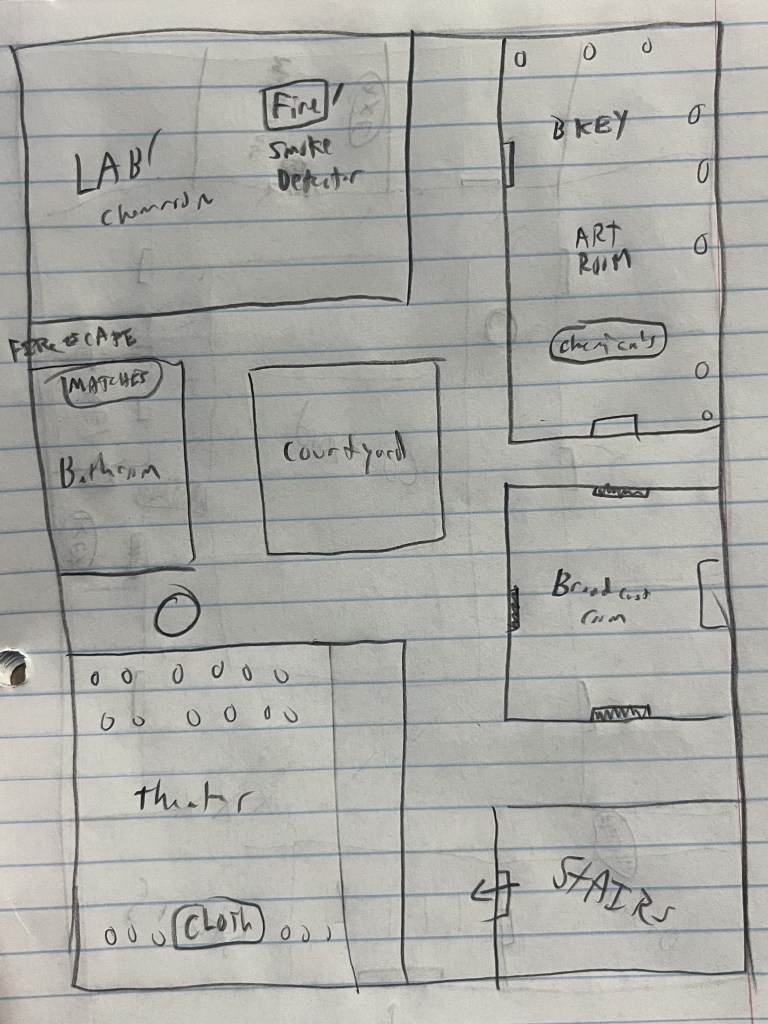
As a group we discussed the layout for this game, first considering what items would be obtained by the player. We then introduced blocking elements to lead the player from one place to the next, deducing where the next interaction takes place. Lastly we added the Enemy characters placements which were additional obstacles for the player, thinking about how their unique AI would affect the player’s interactions.
Mechanics
The classroom monsters on the first floor operate by moving towards the player, but only when they are not looking. This is achieved using the mesh renderer and camera functions to detect whether the monster’s mesh is being rendered in the player’s view.
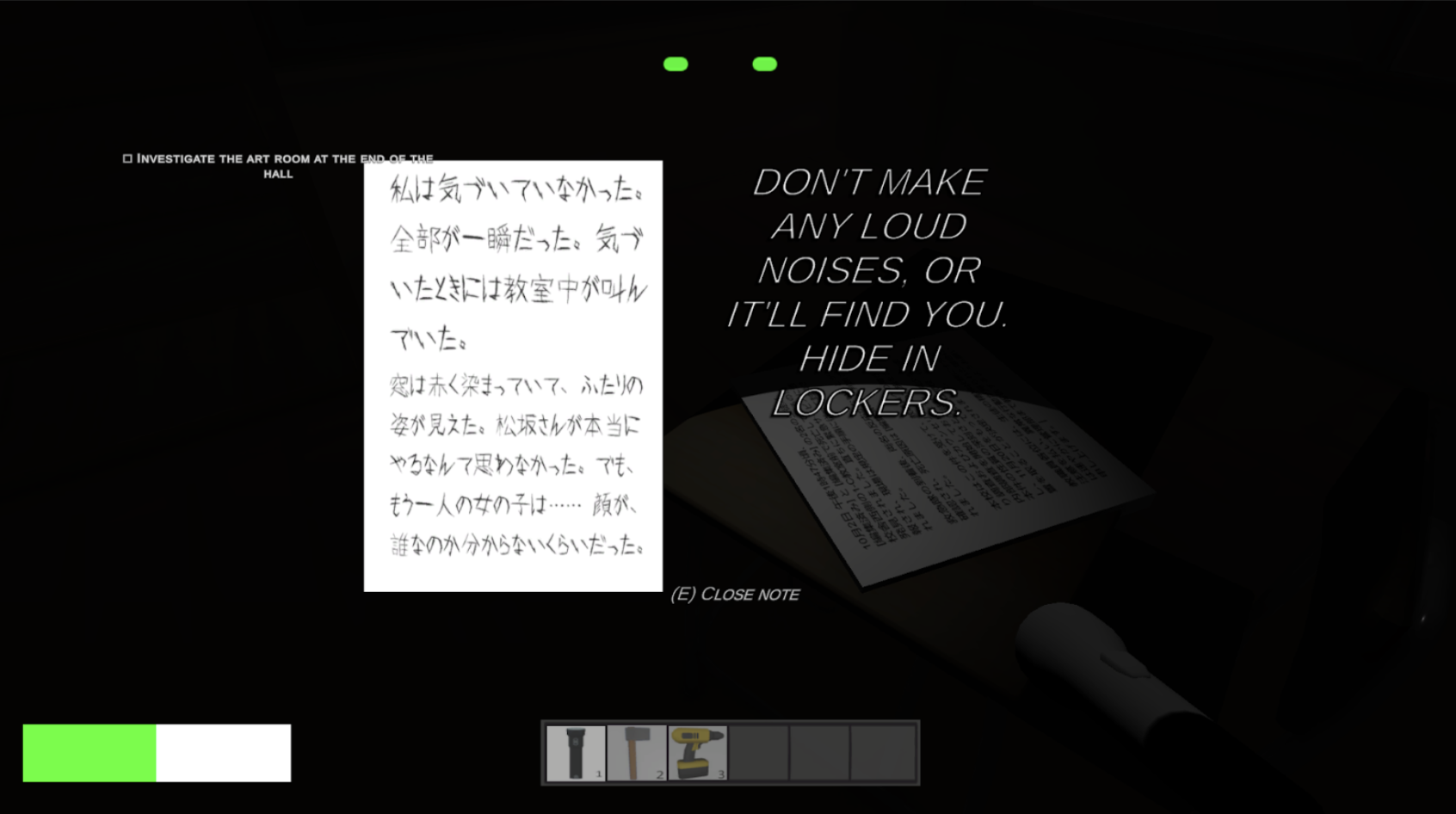
The monster on the second floor operates entirely through sound and can detect the player’s footsteps, item usage, or microphone activity. The AI starts in a pathfinding state, but if the player makes a loud noise, the AI will transition to investigate the source of the sound. If the player is too close, the AI will begin a chase, attacking the player.
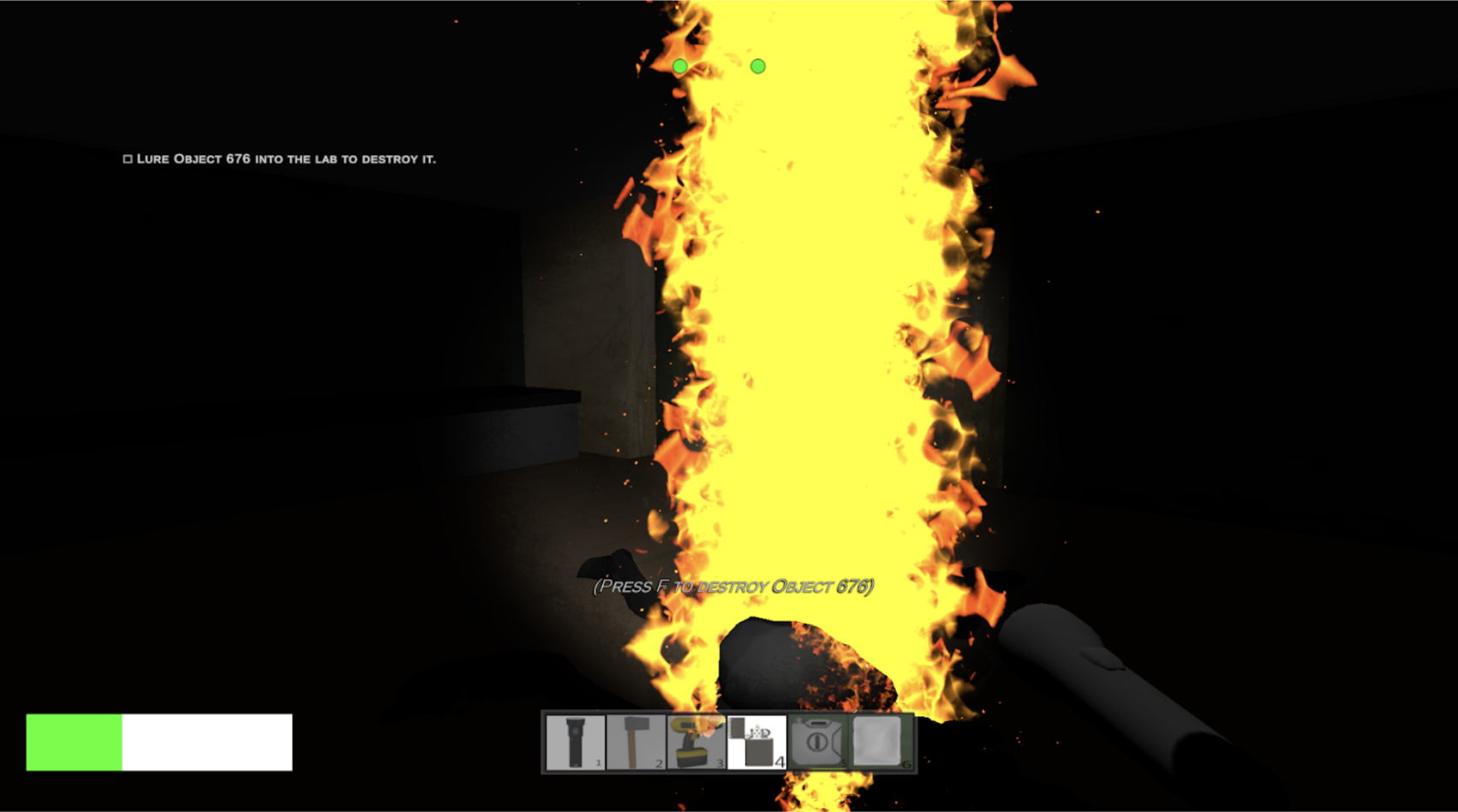
In addition to the monster AI, we implemented UI for health, stamina, and inventory. The player’s health is displayed by a red overlay over the whole screen. The stamina is displayed visually on the bottom left as well as in the audio (panting when out of breath). The inventory is displayed similarly to Minecraft/Roblox for familiarity and is accessible using the number keys.
What I Learned
This project was a lot of fun and taught me a lot about teamwork and project management. In the beginning we planned out what were necessary features to the game and made changes to Brian’s initial concept. For example, the game was intended to have multiple buildings but considering our time frame, we cut it down to one building with multiple levels.
In an interactive experience like a video game, UI design goes beyond just what is displayed on screen but it is also the sound cues which add a lot to the experience. After multiple rounds of user testing we got valuable feedback about our UI and implemented changes to the UI after testing.
Another difficulty was coordinating between different platforms using Unity Version Control. Though it is similar to Github, UVC took a little time to get used to but in the end it turned out to be a convenient tool especially for working on our own branches and solving merge conflicts between them.
Click Image to Download!

